









OpenAI’s latest policy push is easy to misread as two separate ideas—a call for bigger power systems for AI and a call for more generous worker support. The actual proposal is more integrated than that: it treats electrical grid capacity, rapid labor-market response, public wealth sharing, and cross-border governance as parts of one industrial strategy for the AI era.
The grid is framed as an AI deployment constraint, not a side issue
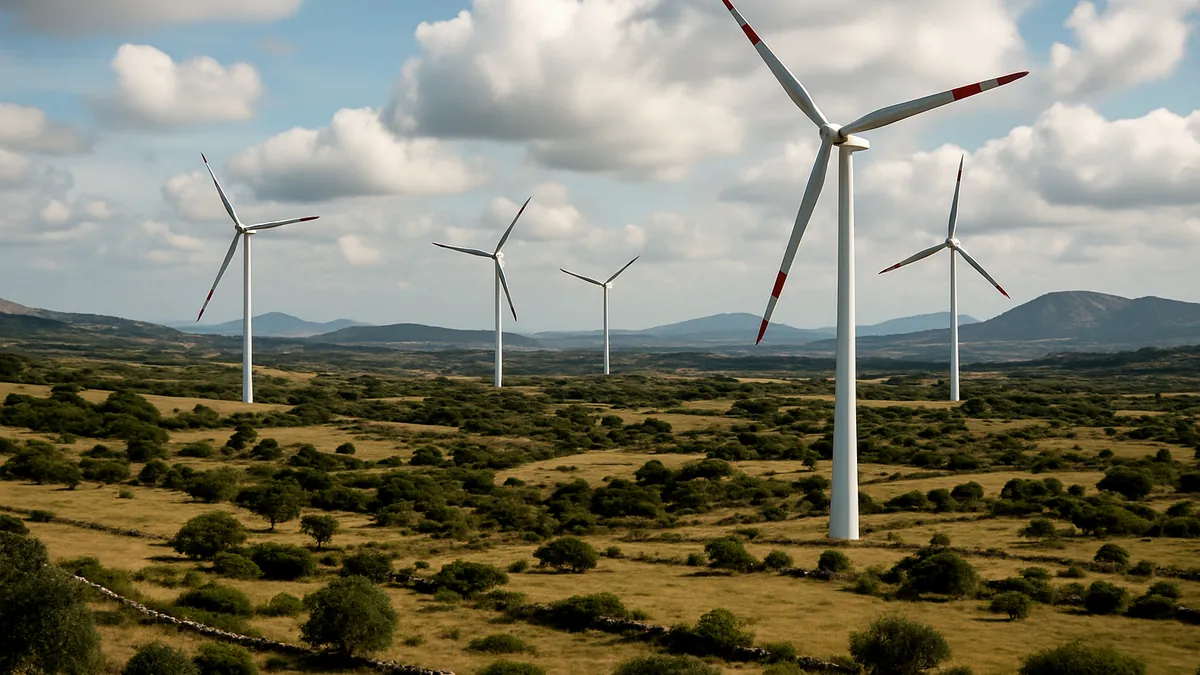
At the center of OpenAI’s proposal is an unusually direct claim about infrastructure: AI deployment will run into physical limits if governments do not speed up electrical grid development. The concern is not abstract energy demand in general, but the rising power needs of AI data centers and the risk that transmission, generation, and interconnection delays become a bottleneck for model training and large-scale inference.
That matters because it shifts the policy discussion away from software capability alone. If grid upgrades lag, the limiting factor for AI development is no longer just chips, models, or talent, but whether enough electricity can reach facilities on time. OpenAI’s argument effectively places AI in the same policy bucket as other power-hungry industries: deployment depends on permits, utility planning, build-out speed, and resilience. Environmental experts broadly support modernization, but the draft proposals leave open practical questions on renewable integration and how grid resilience would be maintained under heavier and more volatile loads.
The labor response OpenAI wants is designed for speed, not only compensation

OpenAI’s workforce proposals are built around fast-response safety nets rather than slow, after-the-fact adjustment programs. The package described in its policy materials combines temporary financial aid, retraining, and reemployment services aimed at sectors expected to grow alongside AI adoption. The distinction is important: the model is not simply to cushion unemployment, but to shorten the time between displacement and reentry into work.
That approach assumes AI-related job disruption may arrive in bursts, unevenly across occupations and regions. A static welfare system is not the main tool OpenAI is describing. It is closer to an agile labor-market mechanism that can detect displacement early, fund short-term support, and route workers toward roles that expand as AI changes business operations. Whether governments can actually run such a system depends on administrative speed, program targeting, and the credibility of retraining pipelines—three areas where policy ambition often exceeds delivery.
Public wealth funds are the redistribution mechanism in the package
The least conventional part of the proposal is OpenAI’s support for public wealth funds modeled in part on Alaska’s oil fund. The idea is to capture a share of AI-driven economic gains and distribute them more broadly, rather than allowing productivity gains to accumulate mainly to firms, investors, and a narrow technical elite. In OpenAI’s framing, this is not a standalone anti-inequality measure; it is part of the same system that makes AI deployment politically and socially sustainable.
If grid expansion enables AI infrastructure and fast-response safety nets manage labor shocks, public wealth funds address a third problem: what happens if AI significantly raises output while concentrating ownership. That is the thread that keeps the proposal from being just a technocratic infrastructure memo or just a social program expansion. It treats wealth concentration as an industrial-policy risk. Public skepticism has focused heavily here, especially where OpenAI appears to be asking governments to create support structures around an industry from which private firms could benefit first and most directly.
| Proposal element | Problem it targets | Practical dependency | Main caution |
|---|---|---|---|
| Accelerated grid development | Power shortages and delayed AI deployment | Permitting, transmission build-out, resilient power supply | Vague detail on renewables integration and system resilience |
| Fast-response safety nets | Sudden worker displacement from automation | Administrative speed, retraining quality, job-matching capacity | Programs may lag real labor-market shifts |
| Public wealth funds | AI gains concentrating among a small group | Funding design, legal authority, distribution rules | Political resistance and concerns about subsidizing incumbents |
| North American Compact for Artificial Intelligence | Fragmented governance across borders | Government coordination, shared standards, enforcement | Hard to align national interests and timelines |
The North American compact shows this is also a geopolitical proposal
OpenAI’s reference to a North American Compact for Artificial Intelligence makes clear that the company is not presenting these ideas only as domestic economic policy. It is arguing that advanced AI, and especially the longer-term prospect of systems exceeding human cognitive performance in many domains, creates governance problems that do not stop at national borders. That includes safety oversight, standards, infrastructure competition, and distribution of economic gains.
The geopolitical layer changes how the rest of the package should be read. Grid upgrades become strategic capacity, not just utility reform. Workforce buffers become part of social stability during rapid technological change. Wealth funds become a way to preserve legitimacy if AI-driven gains scale quickly. Cross-border coordination, in this framing, is meant to reduce the chance that countries race on capability while underinvesting in safeguards or creating incompatible rules that are hard to enforce once systems are widely deployed.
The real checkpoint is whether governments fund any of it
The next useful test is not whether the proposals sound comprehensive on paper, but whether governments and regulators translate them into concrete actions. For the grid piece, that means actual modernization plans, permitting changes, utility approvals, and funding commitments. For labor protections, it means building systems that can deliver temporary aid, retraining, and job placement quickly enough to matter during AI-linked disruption. For wealth funds, it means specifying who contributes, how returns are governed, and who qualifies to benefit.
That is also where the credibility problem sits. Critics have questioned feasibility and corporate motive, especially where OpenAI appears to support government-backed mechanisms that could reduce the social fallout of technologies private firms are commercializing. The practical question is narrower than the online argument: do public authorities adopt any measurable part of the package, and do they do so with enforceable rules and durable budgets rather than broad statements of intent?