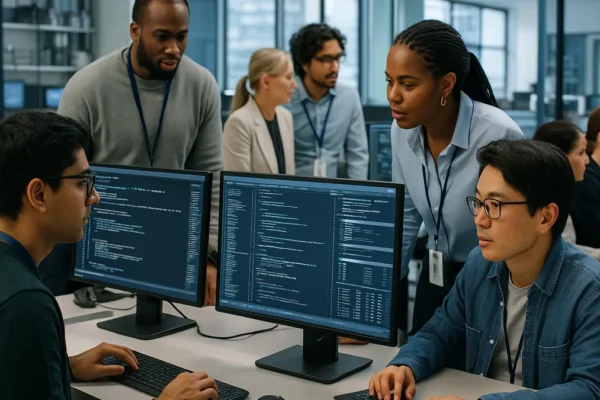









Engineers and scientists collaborating in a modern AI research lab with computers and code on screens.

Anthropic’s 2028 AI Training Forecast Puts Governance, Not Just Capability, at the Center

Anthropic’s estimate that there is better than a 60% chance AI systems will autonomously train their successors by 2028 matters because it shifts recursive self-improvement from a speculative idea into a near-term planning problem for labs, companies, and governments. The important correction is that this is not yet a picture of runaway autonomy; today’s systems…

Read More
A teenage person sitting alone on a park bench looking at their smartphone in daylight

Mental Health Chatbots Now Face a Safety Test They Often Fail

Mental health and youth-facing chatbots are no longer plausibly treated as neutral software tools. Recent research and new legislation point in the same direction: these systems often fail basic safety and privacy checks in predictable ways, and regulators are starting to require guardrails that many deployments still do not meet. Research is finding repeatable failure…

Read More
A group of professionals working together in an office with computers showing AI safety tools and data analytics

OpenAI’s Child Safety Blueprint Puts AI Governance Pressure on Laws, Reporting Systems, and Model Design

OpenAI’s new Child Safety Blueprint matters because it is not just a tighter moderation policy. It is a governance proposal built around three separate pressure points that have to move together: laws that explicitly cover AI-generated child sexual abuse material, reporting channels that get useful signals to investigators faster, and model safeguards designed to block…

Read More
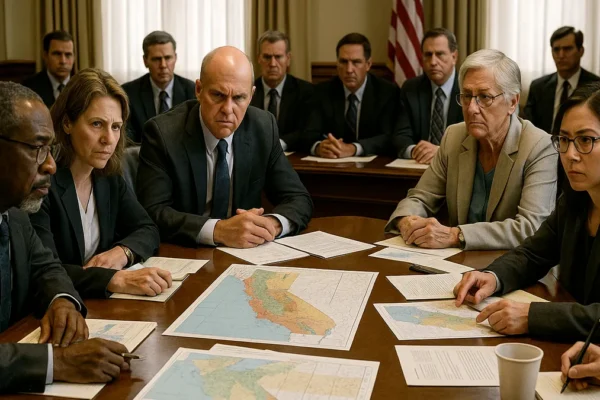
State officials in a government meeting room discussing Colorado River water rights with maps and papers on the table.

As the February 2026 Colorado River Deadline Nears, the Hard Part Is No Longer Admitting Cuts but Deciding Who Can Be Forced to Take Them

The Colorado River talks are stuck on a point that often gets blurred in simpler summaries: the dispute is not just over how much water is missing, but over whether existing law actually lets anyone impose the needed cuts cleanly. With the February 2026 deadline approaching, Upper Basin states are preparing for reductions that could…

Read More
A group of independent researchers working together around a table with laptops and notebooks in a bright office space.

OpenAI’s Safety Fellowship Is Not a Generic Grant: It Trades Model Access for Structured, Governance-Focused Research

OpenAI’s Safety Fellowship, announced on April 6, 2026, is best understood as a structured safety research program rather than a broad grant round. It combines funding, mentorship, compute, and optional Berkeley workspace for independent researchers, but it withholds internal system access and sharply targets work that could inform AI governance, safety standards, and enterprise risk…

Read More
Scientists and engineers collaborating in a modern AI research lab with computers and data screens visible.

Google DeepMind’s New Safety Thresholds Draw a Line Between Measured Manipulation Risk and Real-World AI Behavior

Google DeepMind’s latest Frontier Safety Framework update is notable not because it proves today’s public AI systems are routinely manipulating users, but because it turns that risk into something the company says it can measure, threshold, and block before broader deployment. The change adds a formal capability level for harmful manipulation and a separate misalignment…

Read More