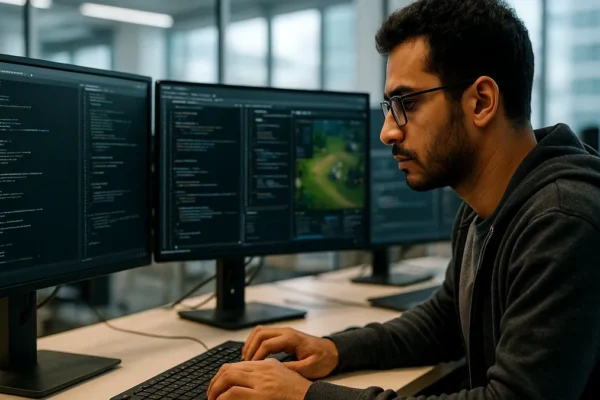








A computer programmer working intently on coding with multiple screens showing code and game interfaces in an office setting.

LLMs Do Not Succeed in Games by Default. The Benchmark and API Layer Is Doing Much of the Work

Recent game-playing results from large language models are easy to overread. The stronger finding is not that LLMs can simply be dropped into games, but that their performance changes sharply when researchers add task-specific evaluation harnesses, game interfaces, and supporting modules that compensate for weak planning, action formatting, or memory. LMGAME-BENCH shows the gap between…

Read More
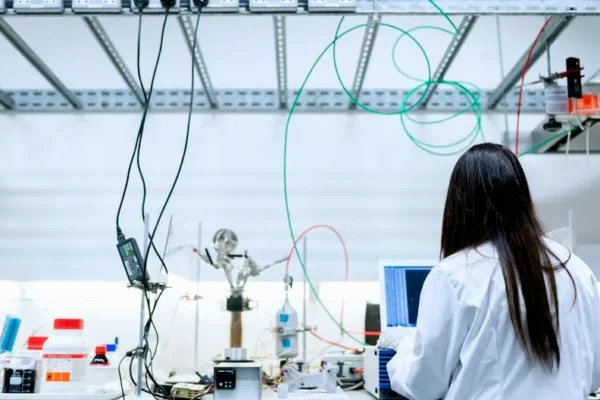
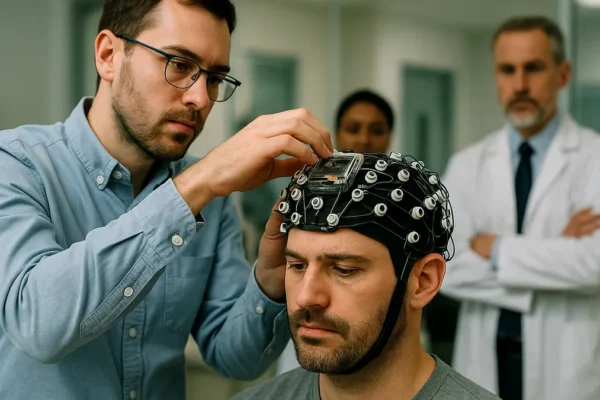
A researcher adjusts a neural stimulation device linked to an optic nerve model in a clinical lab setting with scientific tools and monitors visible.

Non-Invasive Electrical Stimulation for Optic Nerve Repair Is Advancing, but the Real Signal Is Still Trial-Defined

Non-invasive electrical stimulation is gaining attention as a possible way to support optic nerve regeneration, but the useful reading of the research is narrower than the excitement around “restoring sight.” The strongest signal so far is not that a treatment is ready; it is that externally applied stimulation may be able to influence axonal regrowth…

Read More
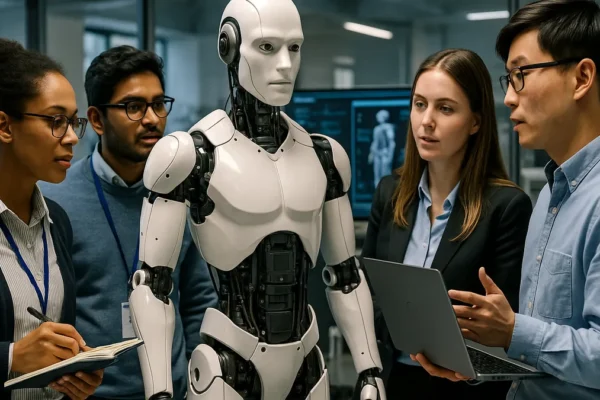
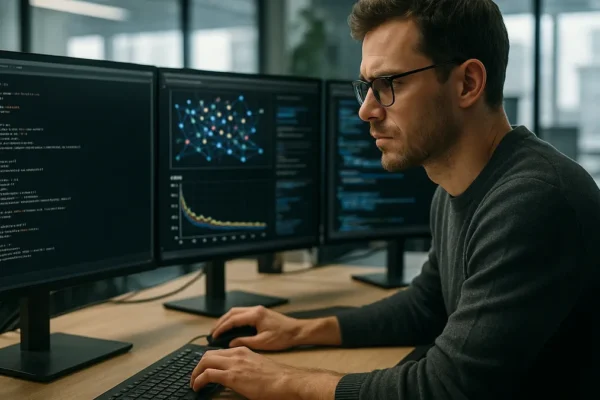
A group of AI researchers collaborating in a lab with multiple computer screens showing neural network data and AI models.

Google DeepMind’s AGI Framework Shifts the Debate From Bigger Models to Measured Cognitive Abilities

Google DeepMind is trying to make AGI progress harder to overstate. Its new framework replaces vague milestone talk and single benchmark scores with a structured test of ten cognitive abilities, then asks a stricter question: how those abilities combine, and how the result compares with demographically representative human baselines. Ten abilities instead of one headline…

Read More
Professor studies complex formulas on a blackboard.

Google’s Bayesian Teaching Upgrade Gives LLMs a Better Way to Update Beliefs

Google Research’s Bayesian Teaching work matters because it targets a specific weakness in current LLMs: they often stop learning anything useful about a user after the first exchange. Instead of fine-tuning models to reproduce final correct answers, Google trains them to imitate a Bayesian assistant’s step-by-step probability updates, so the model learns how to revise…

Read More
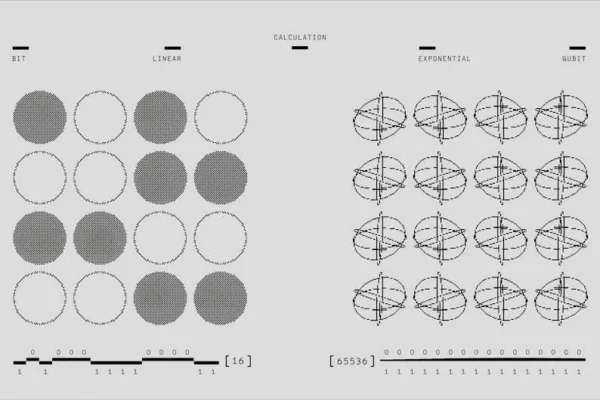
Visual representation of geometric calculations comparing bits and qubits in black and white.

“How Quantum Machine Learning Challenges Traditional Computing Paradigms”

Recent breakthroughs in quantum computing are stirring a profound rethinking of machine learning through the lens of quantum machine learning (QML). This isn’t merely theoretical; it stands poised to redefine our approach to complex data challenges across sectors like healthcare, finance, and artificial intelligence. The urgency of these developments lies in their potential to revolutionize…

Read More
A woman writing in a notebook at a desk.

Navigating Academic Integrity: The Tension of AI-Generated Feedback in Expert Reviews

Grammarly’s introduction of the “Expert Review” feature has ignited a firestorm of ethical debate in academia, as it leverages AI-generated feedback that echoes the voices of both living and deceased scholars. This innovation raises urgent questions about the essence of authorship and authenticity in academic discourse, casting a long shadow over the trustworthiness of technological…

Read More
purple light in white background

“How Flash Radiotherapy Challenges Traditional Cancer Treatment Paradigms”

Flash radiotherapy (Flash-RT) is reshaping the landscape of cancer treatment, introducing a method that delivers high doses of radiation in fractions of a second. This rapid approach is not just a technical marvel; it promises to enhance tumor control while sparing healthy tissues—an enduring challenge in traditional radiotherapy. The stakes are particularly high for patients…

Read More
desktop monitor beside computer tower on inside room

“How the Antscan Project’s Synchrotron Imaging Challenges Traditional Ant Research”

On March 5, 2026, the Antscan project burst onto the scientific scene, unveiling a digital library brimming with thousands of 3D scans of ants, crafted through cutting-edge synchrotron particle accelerator technology. This innovation is crucial, as it grants researchers unprecedented access to intricate anatomical data, enriching our comprehension of ant biodiversity and evolution. Overview of…

Read More