




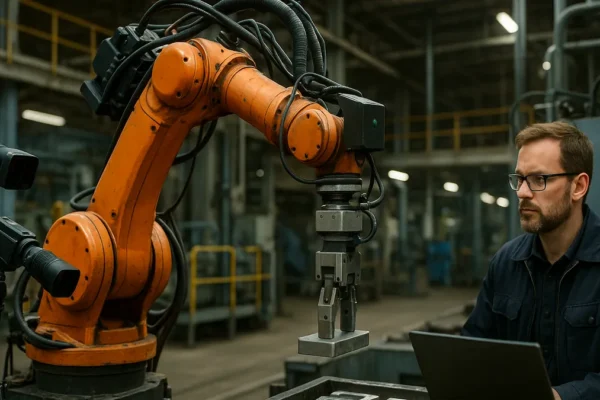
An industrial robot arm working in a factory with multiple cameras and a technician observing nearby equipment.

Gemini Robotics-ER 1.6 Is Not Just Better Vision—it Brings Multi-View Verification and Instrument Reading Closer to Real Robot Work

Google DeepMind’s Gemini Robotics-ER 1.6 should not be read as a routine vision upgrade. The material change is that it combines sharper spatial reasoning, multi-camera task verification, and industrial instrument reading in one embodied AI system, which is much closer to what real robot deployments need than simple object detection gains. Where ER 1.6 moves…
Read More
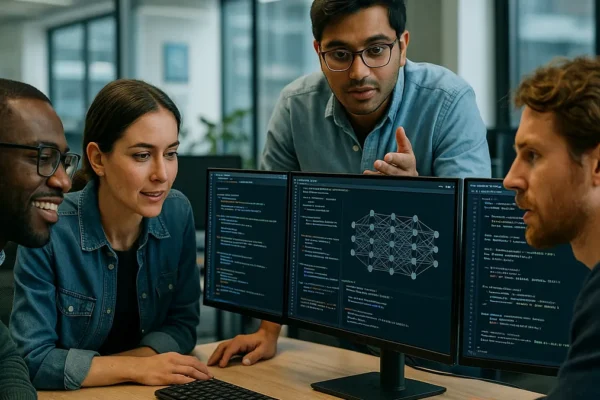
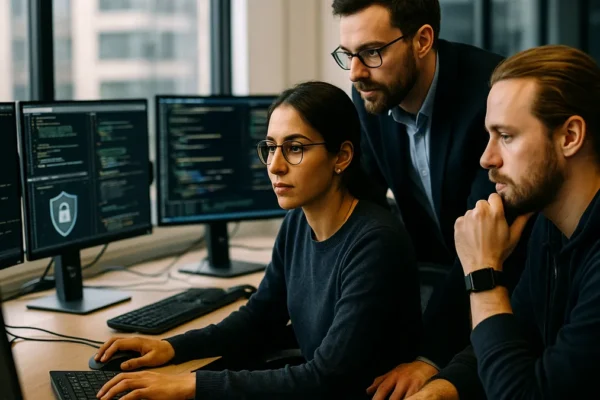
Cybersecurity professionals collaborating in an office, working on computers with code and security data visible on screens.

OpenAI’s GPT-5.4-Cyber Changes the Real Decision in AI Security: Verification Now Matters as Much as Capability

OpenAI’s GPT-5.4-Cyber is not a general release of a more aggressive security model. It is a controlled shift in deployment: a fine-tuned GPT-5.4 variant with lower refusal boundaries for defensive cybersecurity work, made available only to identity-verified defenders through an expanded Trusted Access for Cyber program. Who this model is actually for GPT-5.4-Cyber is built…

Read More
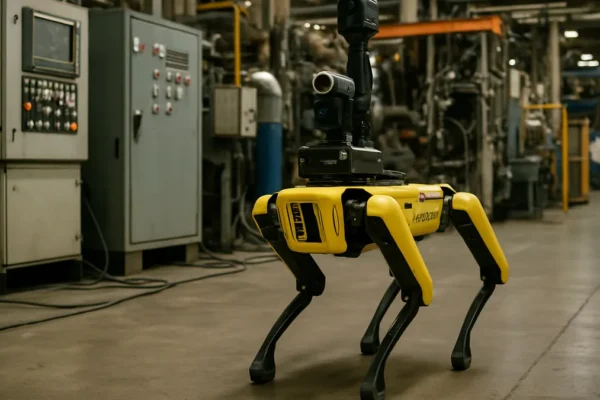
Boston Dynamics Spot robot navigating a factory floor performing inspection tasks with visible machinery and control panels.

April 2026: Boston Dynamics Puts Gemini Robotics-ER 1.6 on Spot for Gauge Reading and Autonomous Inspections

Boston Dynamics has integrated Google DeepMind’s Gemini Robotics-ER 1.6 into Spot, turning the quadruped from a scripted inspection robot into one that can reason through industrial tasks such as reading gauges, checking instruments, and carrying out multi-step actions from natural language prompts. The important shift is not just easier control: Gemini is handling embodied decision-making…

Read More
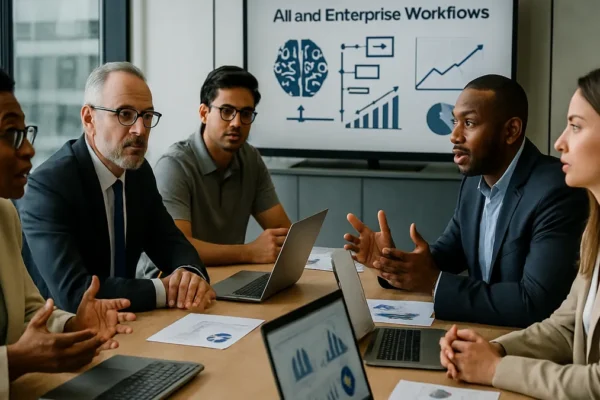
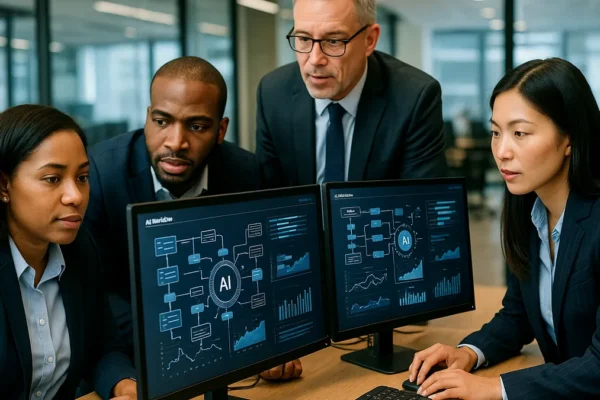
A group of business professionals collaborating around a conference table with laptops and digital charts during a meeting on AI integration.

After the Pilot Phase, OpenAI Frontier Turns Enterprise AI Into a Deployment and Change-Management Project

OpenAI Frontier changes the enterprise AI discussion in a specific way: the hard part is no longer only model capability, but getting agents into regulated workflows, legacy systems, and operating teams without breaking governance. The platform combines agent architecture, consulting partners, and embedded OpenAI engineers because large deployments usually fail at integration and organizational change…

Read More
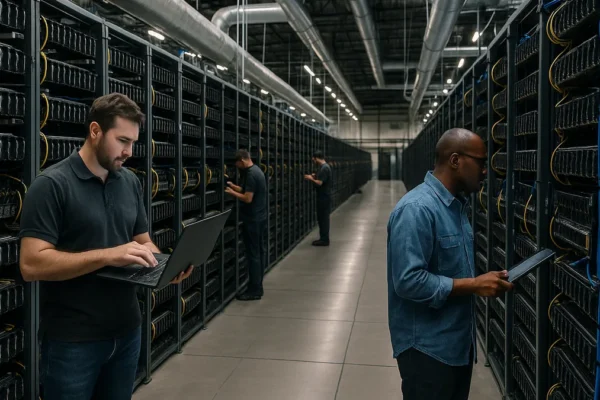
Interior view of a data center with multiple GPU servers and cooling units, technicians monitoring the equipment in a large facility.

Decentralized AI Training Can Cut Cooling and Carbon, but the Network Bill Still Keeps Frontier Models Centralized

Decentralized AI training is not a simple replacement for giant GPU clusters. Its real advantage is narrower: spreading workloads across locations can reduce cooling demand and make cleaner electricity easier to use, but once training depends on tight coordination across many sites, bandwidth, latency, and fiber costs start eating away at those gains. The energy…

Read More
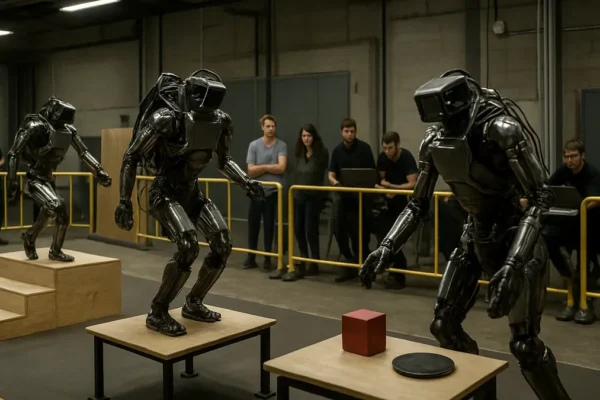
Robots performing tasks in a robotics competition arena with engineers observing in the background.

The DARPA Robotics Challenge Mattered Most as a Deployment Test, Not Proof Humanoid Robots Were Ready

The 2015 DARPA Robotics Challenge was valuable because it tested whether disaster-response robots could keep working through real operating constraints, not because it proved humanoid robots were ready for field deployment. By forcing teams to complete eight sequential mobility and manipulation tasks under degraded communications and without physical resets, the challenge exposed where supervised autonomy…

Read More
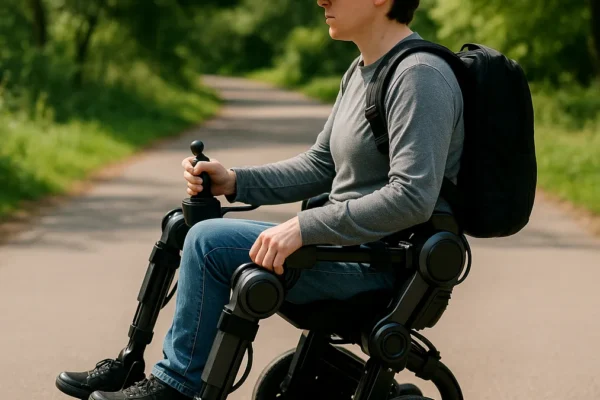
A person outdoors using a self-balancing exoskeleton with joystick control on a paved path surrounded by greenery in daylight.

Why Adaptive Control, Not Hardware Alone, Is Moving Exoskeletons Toward Real Deployment

Recent exoskeleton progress is easiest to misread as better hardware. The stronger signal is elsewhere: self-balancing control, clinically validated torque adaptation, AI-built controllers, and biomechanical load modeling are turning highly specialized machines into systems that can match a user, a task, and an operating environment more closely than earlier designs could. Wandercraft shows what “practical”…

Read More