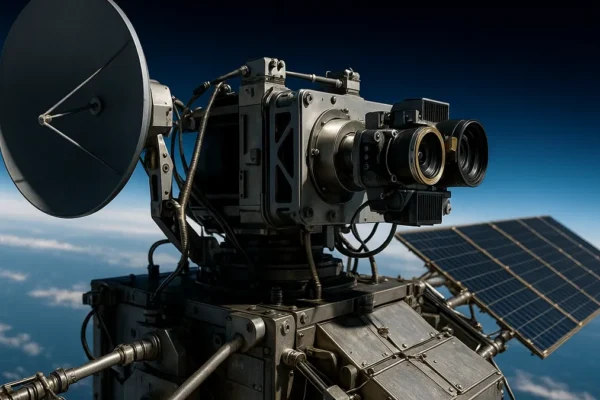








A satellite communication terminal mounted on a spacecraft with Earth visible in the background, showing detailed laser communication hardware.

Laser Links Beat RF on Throughput, but Deployment Depends on Ground Networks That Can Survive the Real World

Space laser communication is no longer just a faster lab alternative to radio. It is becoming operational because three pieces are finally maturing together: smaller terminals on spacecraft, optical ground stations that can keep working in difficult environments, and network designs that treat weather and pointing errors as infrastructure problems rather than side notes. Operational…

Read More
A diverse group of disaster management leaders collaborating around a conference table with laptops and maps during an AI integration workshop in Bangkok.

When Disaster Tasks Pass the “Three Times Yes” Test, OpenAI’s Bangkok AI Jam Starts Looking Like Deployment

OpenAI’s AI Jam in Bangkok was not an AI awareness exercise. It was a working session aimed at one narrower outcome: deciding where AI can be inserted into disaster response workflows in Asia without breaking accountability, speed, or trust. That distinction matters because the event moved the conversation from ad hoc use of ChatGPT during…

Read More
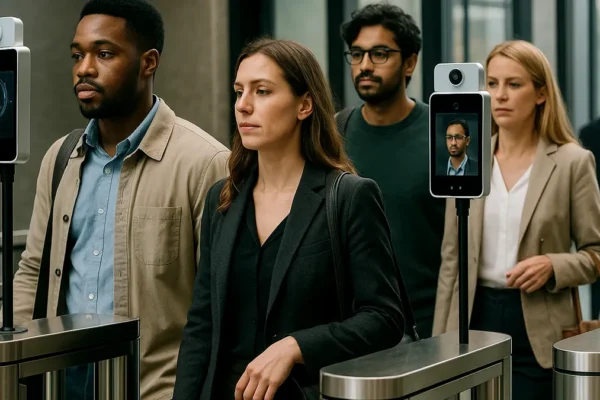
A group of people walking through an office entrance with facial recognition cameras scanning their faces for access control.

Facial Recognition Is Expanding Fast, but Deployment Still Turns on Bias, Privacy, and Local Law

Facial recognition is spreading across security gates, bank onboarding flows, retail systems, and hospitals, but the real story is not universal replacement of older identity checks. The technology works best as a conditional tool: useful for contactless verification and faster screening, yet limited by uneven accuracy, biometric privacy risk, spoofing threats, and country-by-country legal constraints….

Read More
A group of people in different locations using voice assistant devices, showing natural, real-time AI voice interactions.

Gemini 3.1 Flash Live Is Not Just Faster Voice AI: It Adds Emotional Timing, Longer Memory, and Watermarked Audio

Google’s Gemini 3.1 Flash Live changes the practical definition of a real-time voice model: the upgrade is not only lower latency, but a combination of emotional cue handling, longer conversational memory, wide multilingual deployment, and built-in synthetic audio watermarking. That mix matters because voice systems fail in production for different reasons than text systems do—delay,…

Read More
A diverse software development team collaborating around a table with laptops and notebooks in a bright office.

Engineering Teams Get More From AI When They Write Better, Not Just Prompt Better

AI coding tools are not fixing weak engineering communication; they are exposing it faster. The practical decision for teams is whether they already have enough written clarity, translation discipline, and architectural context for AI to speed work without quietly increasing bugs, rework, and technical debt. Who benefits from AI-assisted engineering communication Teams that already document…

Read More