







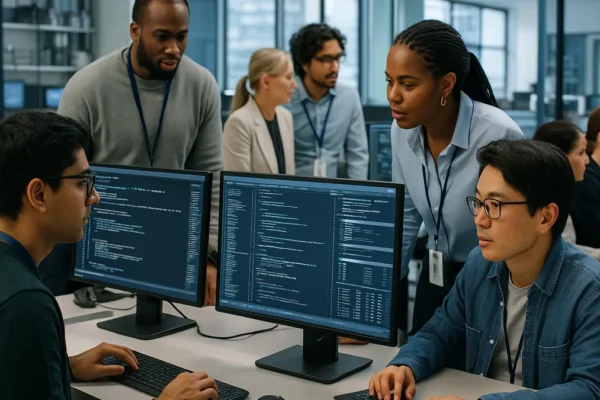
Engineers and scientists collaborating in a modern AI research lab with computers and code on screens.

Anthropic’s 2028 AI Training Forecast Puts Governance, Not Just Capability, at the Center

Anthropic’s estimate that there is better than a 60% chance AI systems will autonomously train their successors by 2028 matters because it shifts recursive self-improvement from a speculative idea into a near-term planning problem for labs, companies, and governments. The important correction is that this is not yet a picture of runaway autonomy; today’s systems…

Read More
A group of AI researchers collaborating in a lab with multiple computer screens showing neural network data and AI models.

Google DeepMind’s AGI Framework Shifts the Debate From Bigger Models to Measured Cognitive Abilities

Google DeepMind is trying to make AGI progress harder to overstate. Its new framework replaces vague milestone talk and single benchmark scores with a structured test of ten cognitive abilities, then asks a stricter question: how those abilities combine, and how the result compares with demographically representative human baselines. Ten abilities instead of one headline…

Read More
a group of women posing for a photo

Hybrid Neuro-Symbolic Fraud Detection Is Already in Production-Like Use, but the Hard Part Is Stability

Hybrid neuro-symbolic fraud detection is not a speculative idea. In finance and insurance, teams are already combining neural models with explicit rules to improve rare-case detection, keep decisions explainable, and satisfy audit demands. The practical distinction is that these systems do not just add rules after the fact; they can inject domain knowledge into training…

Read More
A computer generated image of a number of letters

How LiteRT Runtime Shifts On-Device Machine Learning with New GPU and NPU Limits

TensorFlow 2.21 has introduced a significant change by replacing TensorFlow Lite with LiteRT as its primary runtime for on-device machine learning. This shift arrives at a crucial moment, promising enhanced performance and flexibility for edge AI deployments but requiring developers to adapt to a new operational model. Fundamental Changes in Runtime Architecture LiteRT represents more…

Read More
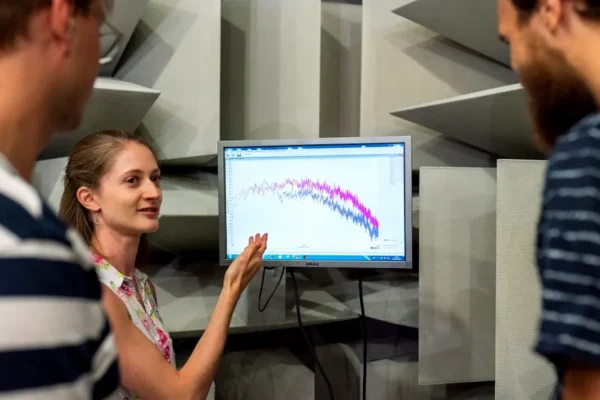
woman in white and red floral sleeveless top standing beside black flat screen tv

Navigating the Tension: Choosing Between Vector Databases and Graph RAG for AI Memory Architecture

Recent advancements in artificial intelligence have ignited a pivotal debate about the memory architectures that power AI agents, particularly focusing on Retrieval-Augmented Generation (RAG) systems. As industries increasingly demand sophisticated memory capabilities for nuanced data retrieval and contextual understanding, the choice between vector databases and graph RAG systems takes center stage. This decision is not…

Read More
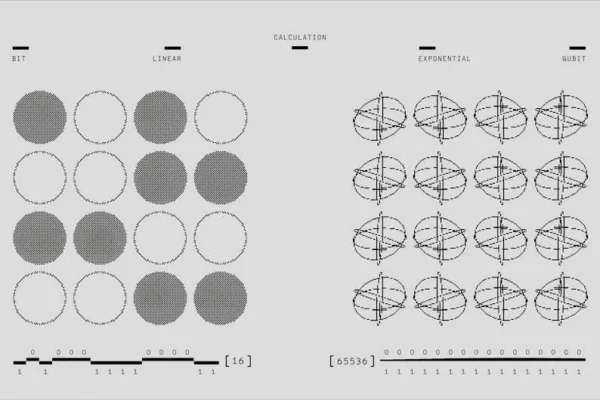
Visual representation of geometric calculations comparing bits and qubits in black and white.

“How Quantum Machine Learning Challenges Traditional Computing Paradigms”

Recent breakthroughs in quantum computing are stirring a profound rethinking of machine learning through the lens of quantum machine learning (QML). This isn’t merely theoretical; it stands poised to redefine our approach to complex data challenges across sectors like healthcare, finance, and artificial intelligence. The urgency of these developments lies in their potential to revolutionize…

Read More