








Google Stax Turns LLM Testing From Vibe Checks Into Repeatable Deployment Evaluation
Google’s experimental Stax tool is not just another benchmark and not merely an automated test harness. Its main change is more practical: it gives teams a way to evaluate LLM applications against their own prompts, edge cases, business rules, and compliance needs using a repeatable mix of human review and AI-based scoring. What changed in…

ChatGPT’s New Interactive Math and Science Tools Are About Exploration, Not Answer Automation
OpenAI’s latest education-facing change is not just that ChatGPT can explain math and science more fluently. It can now generate interactive visuals for more than 70 concepts, and related custom GPTs are being used to simulate student misconceptions for teacher training. The practical shift is from static explanation toward guided exploration and rehearsal: students manipulate…
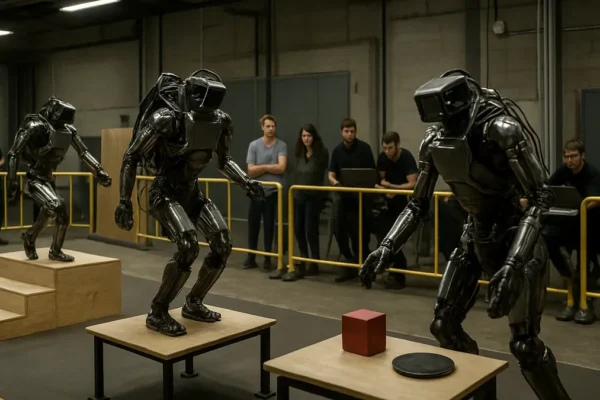
The DARPA Robotics Challenge Mattered Most as a Deployment Test, Not Proof Humanoid Robots Were Ready
The 2015 DARPA Robotics Challenge was valuable because it tested whether disaster-response robots could keep working through real operating constraints, not because it proved humanoid robots were ready for field deployment. By forcing teams to complete eight sequential mobility and manipulation tasks under degraded communications and without physical resets, the challenge exposed where supervised autonomy…
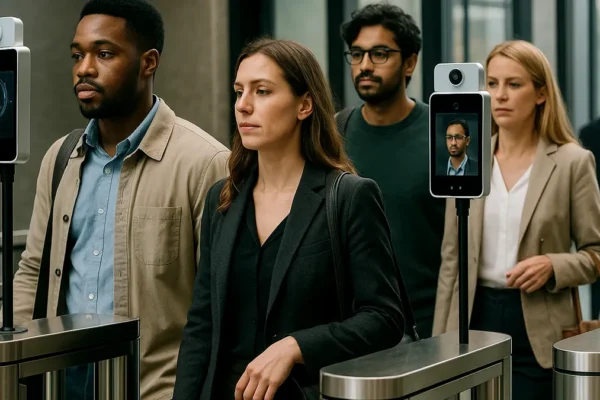
Facial Recognition Is Expanding Fast, but Deployment Still Turns on Bias, Privacy, and Local Law
Facial recognition is spreading across security gates, bank onboarding flows, retail systems, and hospitals, but the real story is not universal replacement of older identity checks. The technology works best as a conditional tool: useful for contactless verification and faster screening, yet limited by uneven accuracy, biometric privacy risk, spoofing threats, and country-by-country legal constraints….
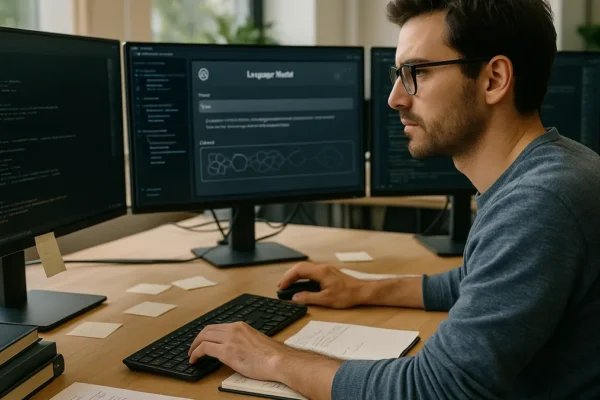
Layered defenses are cutting prompt injection risk, but they do not remove the LLM weakness underneath
Prompt injection is not a one-time filter problem. It comes from a basic limitation in large language models: they do not reliably separate instructions from data. That is why the strongest recent results come from stacked defenses rather than prompt hardening alone, and why AI agents connected to search, files, memory, or external tools remain…
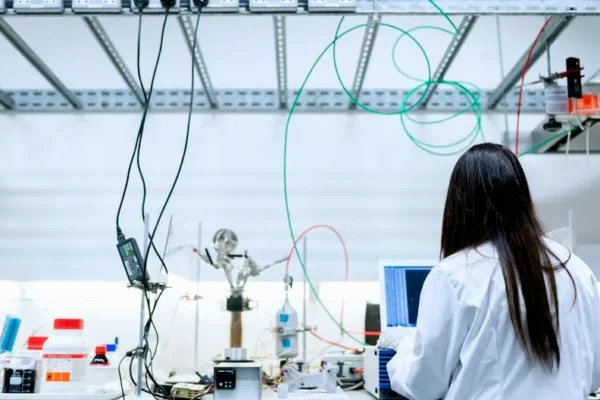
ASI-Arch Turns Neural Architecture Discovery Into a Compute-Scaled Research Loop
ASI-Arch matters because it is not just a better neural architecture search system. It shows a different operating model: an autonomous research loop that proposes ideas, builds them, tests them, and learns from the results at a scale tied to compute rather than to how many human researchers can manually iterate. What changed from traditional…

If the Pilot Cuts Teacher Workload, ATL Saathi Could Change How India’s Tinkering Labs Actually Operate
Google DeepMind and India’s Atal Innovation Mission have launched ATL Saathi as a teacher-facing AI assistant for Atal Tinkering Labs, not as a chatbot for students. That distinction matters because the 100-school pilot is testing a specific deployment thesis: whether Gemini-based support can turn scattered training material and ad hoc project guidance into a practical…
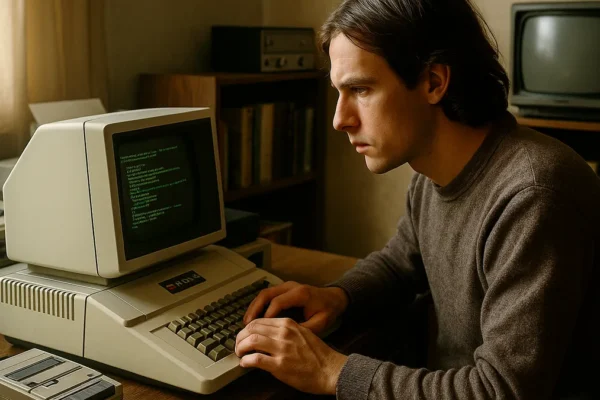
Apple’s 50-Year Shift: Not Just Product Design, but a Steady Expansion of Computing Capability
Apple’s history is often compressed into aesthetics and marketing, but the stronger pattern over the past 50 years is technical: each major era changed what ordinary users could do with a computer, a phone, or a wearable, and how tightly those devices worked together. From the Apple I in 1976 to current Macs built on…
“How the Antscan Project’s Synchrotron Imaging Challenges Traditional Ant Research”
On March 5, 2026, the Antscan project burst onto the scientific scene, unveiling a digital library brimming with thousands of 3D scans of ants, crafted through cutting-edge synchrotron particle accelerator technology. This innovation is crucial, as it grants researchers unprecedented access to intricate anatomical data, enriching our comprehension of ant biodiversity and evolution. Overview of…