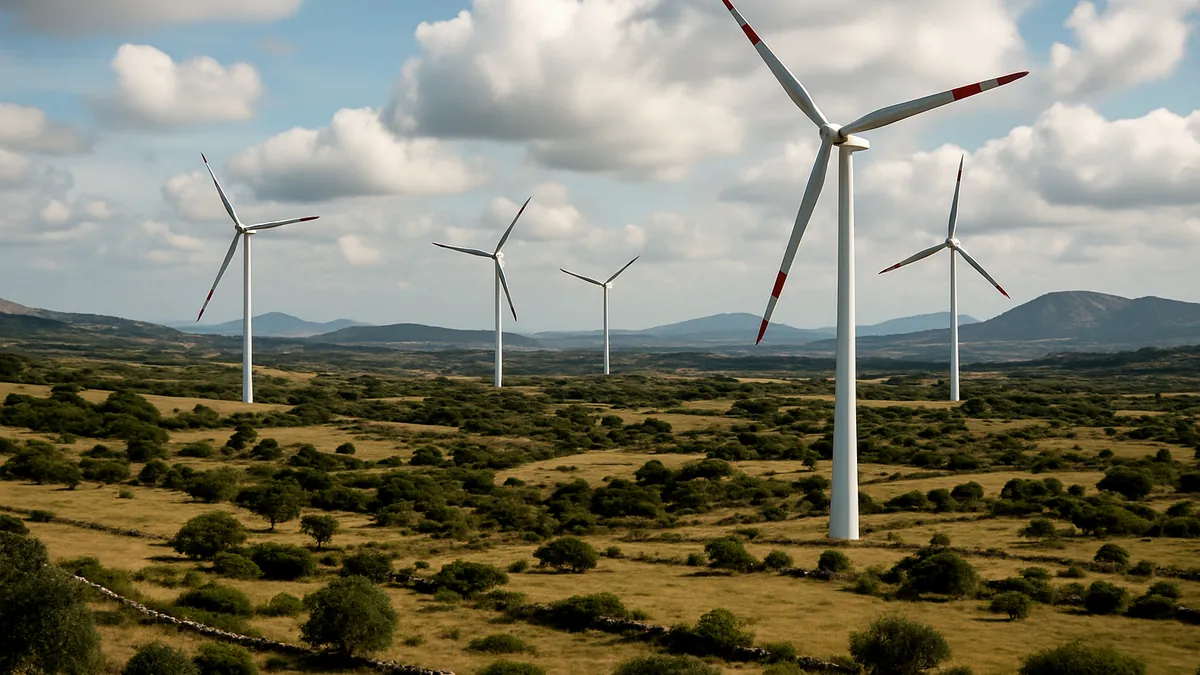









The Trump administration’s pause on large-scale East Coast offshore wind leases is being justified on a narrower and more concrete basis than simple opposition to wind power: military radar interference, undersea sensing disruption, and supply-chain exposure tied to foreign-made components. That distinction matters because it shifts the next decision point from politics to whether these risks can actually be mitigated well enough for projects to move forward.
What changed, and which projects are affected?
The Department of the Interior halted progress on major offshore wind leases near the East Coast, directly affecting Vineyard Wind 1, Revolution Wind, Coastal Virginia Offshore Wind (CVOW), Sunrise Wind, and Empire Wind 1. These are not small pilot sites. They are among the largest and most visible offshore wind developments in the U.S., located near dense population centers and defense infrastructure.
The administration’s stated rationale is that the security environment has changed. Interior Secretary Doug Burgum pointed to evolving adversary technologies and to the placement of large offshore wind arrays near systems that support early warning, naval monitoring, and emergency operations. That is different from arguing that offshore wind is undesirable in general. The claim is that current deployment conditions on the East Coast create unresolved defense vulnerabilities.
This also corrects a common misreading of the pause. Critics may still see political motives, and developers have said as much, but the official case is not built only on ideology or aesthetics. It is built on a specific set of technical and operational risks that federal agencies say remain unresolved.
Why are turbines a problem for military radar?
The central issue is radar clutter. Offshore wind turbines are large moving structures with reflective towers and rotating blades, and those blades can generate returns that look like motion on radar. In practice, that can obscure real objects, create false tracks, or force operators to raise filtering thresholds. A 2024 Department of Energy study and other government reporting have warned that stronger filtering can remove clutter but also increase the chance of missing an actual target.

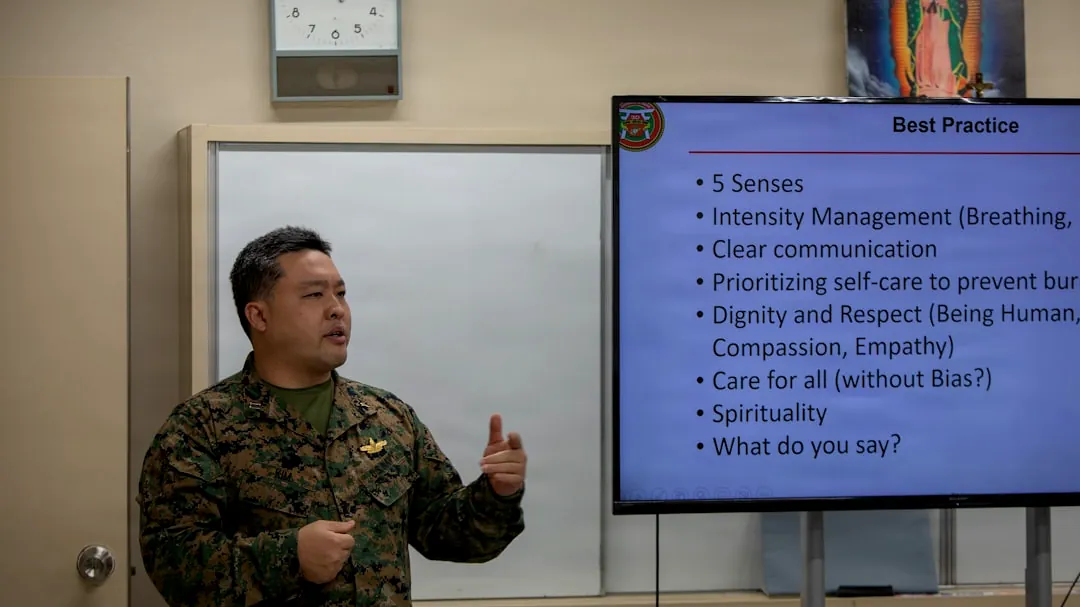
The most sensitive example in the current debate is the PAVE PAWS radar at Cape Cod Space Force Station, identified as the East Coast’s only ballistic missile early warning system. If turbine fields degrade that radar’s ability to detect or classify incoming threats, the issue is not marginal. It goes to warning time and confidence in the signal. Classified Defense Department assessments reportedly reinforce that concern, especially as adversary systems become harder to detect and more capable of exploiting sensing gaps.
Developers argue that mitigation is possible through radar upgrades, software changes, and operational curtailments. The problem is that these measures can involve trade-offs. A mitigation that works for routine air-surveillance conditions may still be judged insufficient for missile warning or for edge cases involving low-signature or fast-moving threats. That is why the dispute has not been settled by saying the industry has already been vetted.
The security case goes beyond radar
The administration’s position also includes undersea and supply-chain concerns. Offshore wind farms can emit vibrations, electromagnetic fields, and acoustic signals underwater. The concern is that these signals may interfere with systems used for submarine detection or with monitoring around undersea cables. Even if the effect is limited in some locations, the threshold for acceptance is different when naval intelligence and cable security are involved.
Supply-chain exposure adds another layer. Many turbine components are manufactured in China, which raises the risk that critical energy infrastructure could carry espionage or sabotage vulnerabilities. That does not require a claim that every component is compromised. The concern is that dependence on foreign-made parts in strategically located infrastructure creates a persistent attack surface that is difficult to audit fully after deployment.
Military and Coast Guard operations are part of the same picture. Offshore wind arrays may obstruct training routes and complicate search-and-rescue patterns. Those are not abstract objections. They affect how quickly forces can move, how sensors perform in cluttered environments, and how emergency operations are planned in bad weather or low-visibility conditions.
Where the argument is strongest, and where it is still contested
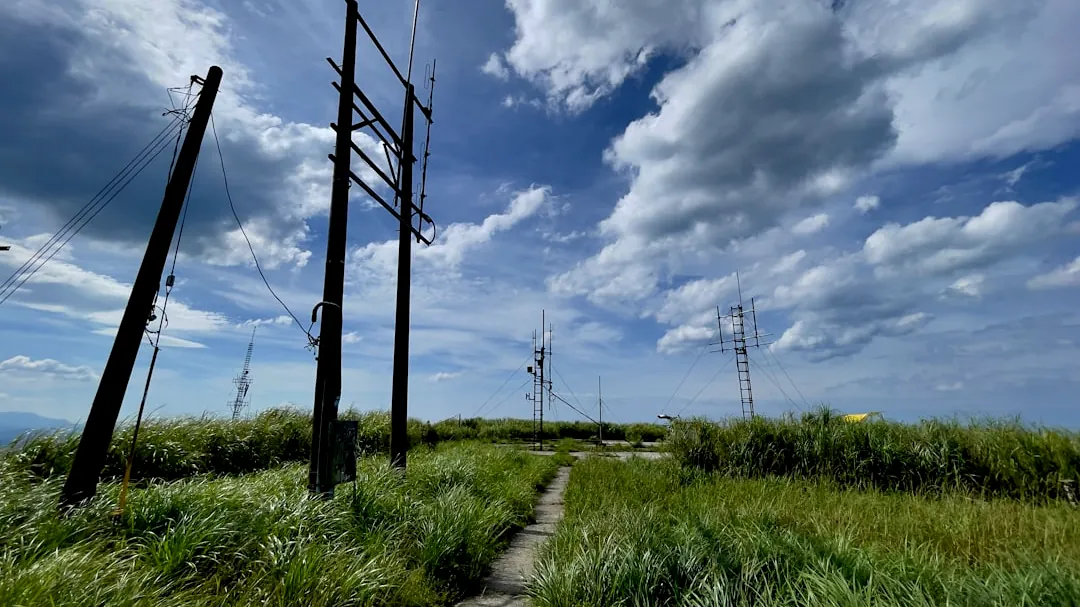
| Issue | Government security concern | Industry response | What remains unresolved |
|---|---|---|---|
| Radar interference | Turbine blades and towers create clutter that may degrade detection and early warning, including around PAVE PAWS | Radar upgrades, software filtering, and curtailment can reduce interference | Whether mitigation preserves performance under worst-case defense conditions |
| Undersea sensing | Acoustic, vibrational, and electromagnetic emissions may affect submarine detection and cable monitoring | Effects may be manageable or site-specific | How much interference is acceptable near sensitive naval operations |
| Supply chain | Chinese-made components could introduce espionage or sabotage risk | Projects have passed existing procurement and review processes | Whether current vetting is sufficient for critical infrastructure near defense assets |
| Operations and emergency response | Wind arrays may complicate training routes and Coast Guard search and rescue | Operational planning can adapt around fixed installations | Whether adaptation imposes unacceptable delays or constraints in real incidents |
The strongest part of the administration’s case is that these risks are cumulative. A project does not need to fail on every dimension to become unacceptable. A moderate radar penalty, combined with uncertain undersea effects and foreign-component exposure, can be enough to trigger a pause when the site is close to critical defense systems.
The most contested part is transparency. The Defense Department has reportedly supplied classified assessments, but the detailed findings have not been made public. That leaves developers such as Dominion Energy and Sunrise Wind arguing that they have already spent heavily on compliance and mitigation without being shown a clear technical standard they failed to meet. From a deployment standpoint, that uncertainty matters almost as much as the pause itself, because it makes planning and financing harder even if projects are later allowed to resume.
The real next checkpoint is mitigation, not rhetoric
The practical question now is not whether offshore wind has economic value or whether states want the power. Grid operators in the Northeast and Mid-Atlantic have already warned that delays or cancellations could raise electricity prices and complicate reliability planning, especially where offshore wind had been built into future supply assumptions. States such as Connecticut have also criticized the pause for disrupting jobs and investment timing.
But those arguments will not resolve the current impasse unless they are paired with credible answers to the defense case. The next checkpoint is whether technological or operational mitigations can satisfy military requirements on radar performance, undersea monitoring, and component security. If they cannot, the pause is likely to harden into a longer-term deployment limit for offshore wind near sensitive East Coast assets.
If they can, the path forward will probably look narrower than earlier offshore wind plans assumed: more defense-led siting reviews, stricter rules on foreign-made components, and project-specific operating constraints rather than blanket approval. In other words, even a restart would mean a different deployment model than the one developers expected before the pause.