
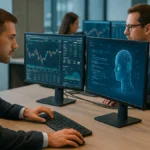




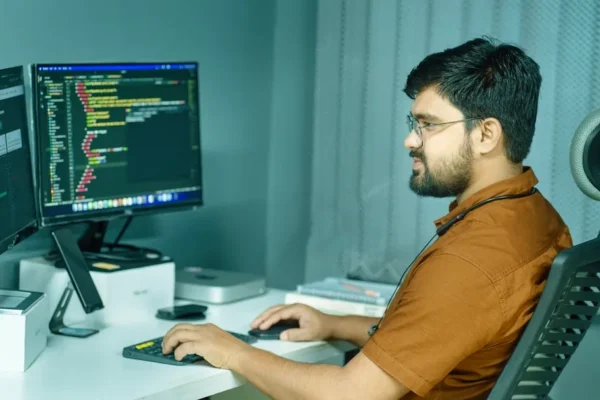
a man sitting at a desk using a computer

“How KV Caching Reshapes Inference Speed in Large Language Models”

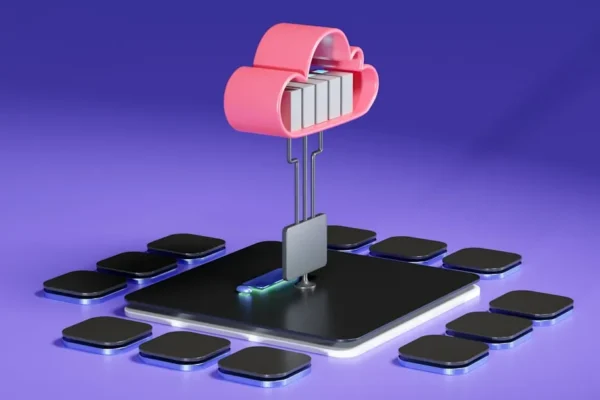
Recent advancements in KV caching have significantly transformed the inference speed of large language models (LLMs), particularly during autoregressive generation. This development is crucial as it enhances performance in the rapidly evolving field of natural language processing (NLP). Understanding these changes is essential for developers looking to optimize their models. Understanding KV Caching KV caching…

Read More
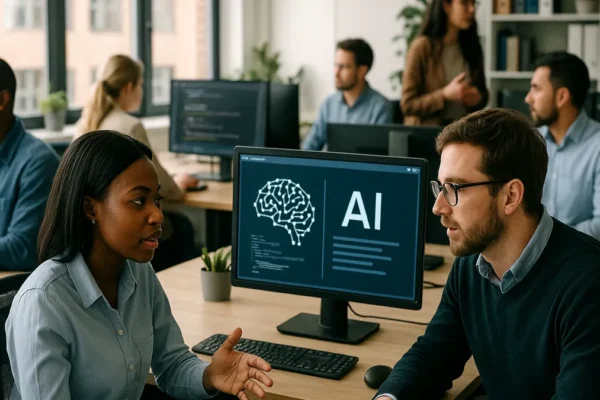
A group of professionals collaborating in a modern office with computers and AI-related displays visible on screens.

GPT-5.5 Instant Is Not a Cosmetic ChatGPT Refresh but a Default Model Swap With Fewer Hallucinations and New Memory Controls

OpenAI has replaced ChatGPT’s default model with GPT-5.5 Instant, and the important change is not cleaner tone or fewer emojis. Starting May 5, 2026, the default experience for ChatGPT users shifted to a faster model that OpenAI says materially reduces hallucinations in medicine, law, and finance while adding a new way to see and manage…

Read More
Telecommunications tower with antennas and small cells in an urban area under clear sky, representing advanced wireless infrastructure.

If 6G Stays AI-Native, Its Real Break from 5G Will Be Infrastructure and Control, Not Just Speed

6G is still a late-decade standardization project, not a near-term consumer upgrade, and its defining change is not simply higher throughput than 5G. The shift under discussion is toward an AI-native wireless system that uses new spectrum bands, integrated sensing, and far more autonomous network behavior—while also introducing harder deployment constraints around terahertz hardware, dense…

Read More
Woman working on a laptop at a desk.

“How Anthropic’s Cowork AI Challenges Traditional Automation in File Management”

Overview of Claude Cowork’s Functionality The advent of Claude Cowork marks a significant shift in the landscape of AI productivity tools. As organizations increasingly embrace remote work, the need for efficient digital solutions has never been more pressing. At the core of Claude Cowork’s functionality lies an “agentic loop,” a mechanism that allows the AI…

Read More
a laptop computer sitting on top of a wooden desk

Why the Goose Framework Challenges Claude Code’s $200 AI Tool Model

Advancements in AI Tool Calling Models Recent advancements in AI tool-calling models, particularly within the Goose framework, are fundamentally altering how AI agents perform real-world tasks. This transformation is critical as the demand for adaptable AI solutions surges, underscoring the essential role of tool calling in moving from mere text generation to executing complex actions….

Read More
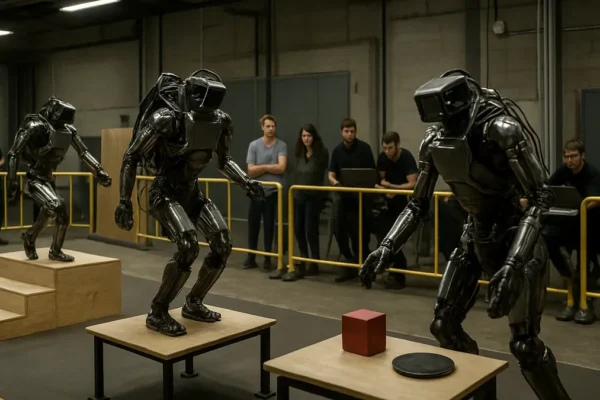
Robots performing tasks in a robotics competition arena with engineers observing in the background.

The DARPA Robotics Challenge Mattered Most as a Deployment Test, Not Proof Humanoid Robots Were Ready

The 2015 DARPA Robotics Challenge was valuable because it tested whether disaster-response robots could keep working through real operating constraints, not because it proved humanoid robots were ready for field deployment. By forcing teams to complete eight sequential mobility and manipulation tasks under degraded communications and without physical resets, the challenge exposed where supervised autonomy…

Read More
A person sitting in a chair with a laptop and a credit card

Agentic AI in Finance Is Not Just Better Automation: It Changes How Workflows Are Run

Agentic AI matters in finance because it shifts automation from single tasks to managed outcomes. Instead of using one model or bot for one step, firms coordinate specialized agents with defined roles, feedback loops, and escalation paths across workflows such as order-to-cash and record-to-report. That makes the opportunity larger than classic automation, but it also…

Read More
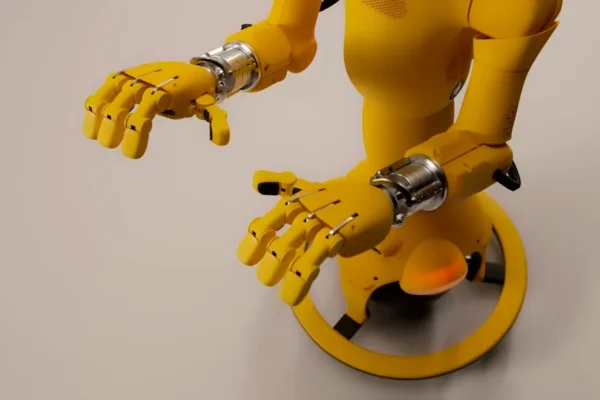
Yellow robot with articulated hands on a white background

The Tension Between Innovation and Limitation in Robotic Hands with Artificial Muscles

Recent innovations in robotic hands, powered by artificial muscles and tendons, are radically transforming the landscape of humanoid robotics. This leap forward enhances dexterity and functionality, opening the door to more nuanced human-robot interactions, particularly in areas demanding fine motor skills like prosthetics and robotic assistance. Understanding these advancements is crucial as they may redefine…

Read More