




five people sitting at table and talking

OpenClaw Setup Errors Usually Aren’t Software Bugs: The Environment Checks That Fix Most Failures

Most OpenClaw setup failures come from deployment conditions, not from OpenClaw itself. In practice, the repeat offenders are a too-old Node.js runtime, npm permission mistakes, broken config state, occupied port 18789, and invalid API or channel tokens. If you treat the problem as an application bug first, you usually lose time on the wrong layer….

Read More
A person sitting in a chair with a laptop and a credit card

Agentic AI in Finance Is Not Just Better Automation: It Changes How Workflows Are Run

Agentic AI matters in finance because it shifts automation from single tasks to managed outcomes. Instead of using one model or bot for one step, firms coordinate specialized agents with defined roles, feedback loops, and escalation paths across workflows such as order-to-cash and record-to-report. That makes the opportunity larger than classic automation, but it also…

Read More
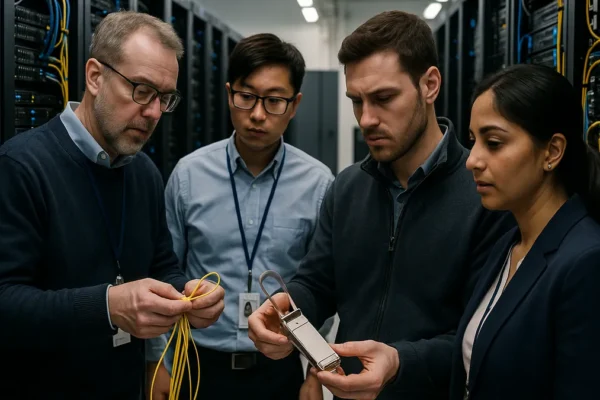
Engineers inspecting fiber optic cables and silicon photonics modules inside a busy data center server room.

Two On-Chip Laser Paths Are Emerging for AI Data Centers, and They Solve Different Bottlenecks

These new optical sources should not be read as generic laser upgrades for AI infrastructure. Tower Semiconductor and Xscape Photonics on one side, and Scintil Photonics on the other, are advancing different integration methods for the same pressure point: AI clusters need more bandwidth per fiber, lower packaging complexity, and much tighter reliability than traditional…

Read More
Robots performing tasks in a robotics competition arena with engineers observing in the background.

The DARPA Robotics Challenge Mattered Most as a Deployment Test, Not Proof Humanoid Robots Were Ready

The 2015 DARPA Robotics Challenge was valuable because it tested whether disaster-response robots could keep working through real operating constraints, not because it proved humanoid robots were ready for field deployment. By forcing teams to complete eight sequential mobility and manipulation tasks under degraded communications and without physical resets, the challenge exposed where supervised autonomy…

Read More
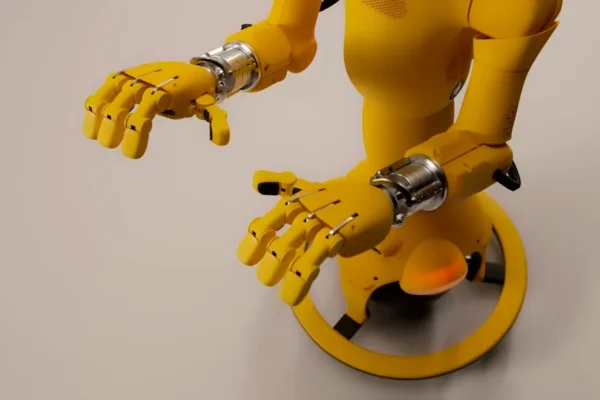
Yellow robot with articulated hands on a white background

The Tension Between Innovation and Limitation in Robotic Hands with Artificial Muscles

Recent innovations in robotic hands, powered by artificial muscles and tendons, are radically transforming the landscape of humanoid robotics. This leap forward enhances dexterity and functionality, opening the door to more nuanced human-robot interactions, particularly in areas demanding fine motor skills like prosthetics and robotic assistance. Understanding these advancements is crucial as they may redefine…

Read More
a group of women posing for a photo

Hybrid Neuro-Symbolic Fraud Detection Is Already in Production-Like Use, but the Hard Part Is Stability

Hybrid neuro-symbolic fraud detection is not a speculative idea. In finance and insurance, teams are already combining neural models with explicit rules to improve rare-case detection, keep decisions explainable, and satisfy audit demands. The practical distinction is that these systems do not just add rules after the fact; they can inject domain knowledge into training…

Read More