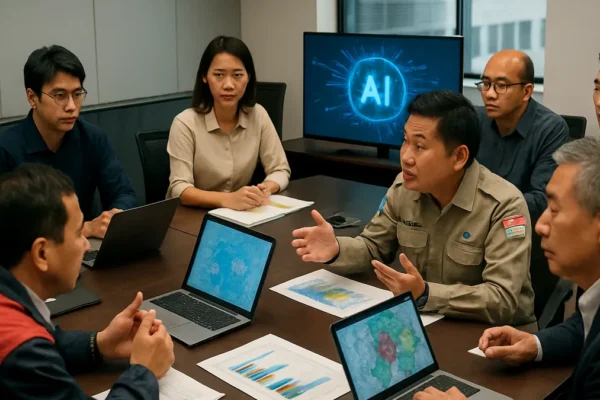







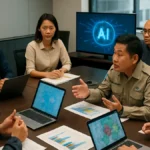
A diverse group of disaster management leaders collaborating around a conference table with laptops and maps during an AI integration workshop in Bangkok.

When Disaster Tasks Pass the “Three Times Yes” Test, OpenAI’s Bangkok AI Jam Starts Looking Like Deployment

OpenAI’s AI Jam in Bangkok was not an AI awareness exercise. It was a working session aimed at one narrower outcome: deciding where AI can be inserted into disaster response workflows in Asia without breaking accountability, speed, or trust. That distinction matters because the event moved the conversation from ad hoc use of ChatGPT during…

Read More
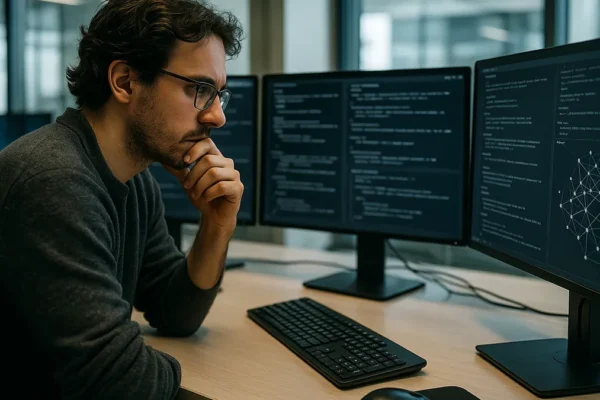
Scientists and engineers collaborating in a modern AI research lab with computers and data screens visible.

Google DeepMind’s New Safety Thresholds Draw a Line Between Measured Manipulation Risk and Real-World AI Behavior

Google DeepMind’s latest Frontier Safety Framework update is notable not because it proves today’s public AI systems are routinely manipulating users, but because it turns that risk into something the company says it can measure, threshold, and block before broader deployment. The change adds a formal capability level for harmful manipulation and a separate misalignment…

Read More
A diverse team of technology professionals collaborating around a table with laptops in a modern office environment.

If You Need Custom AI Behavior Without Losing Hard Safety Limits, OpenAI’s Model Spec Is the Real Change

OpenAI’s Model Spec matters because it is not just a private policy memo about model behavior. It is a public framework that sets a fixed instruction hierarchy, keeps some safety limits non-overridable, and still leaves room for developers and users to customize how systems respond in real deployments. The instruction hierarchy is the enforcement mechanism…

Read More
A diverse group of people sitting around a table in a conference room actively discussing and using voting devices during an AI public dialogue event.

AI Public Dialogue Is Not a PR Exercise: What AI Café 2024 and Similar Models Actually Change

AI public dialogue is often treated as a way to explain technology to citizens after key decisions are already made. The stronger examples work differently: they let citizens, end-users, and experts interact early enough to shift opinion, define requirements, and test governance assumptions before AI systems or rules harden. AI Café 2024 in Luxembourg, participatory…

Read More
A group of AI researchers collaborating in a lab with multiple computer screens showing neural network data and AI models.

Google DeepMind’s AGI Framework Shifts the Debate From Bigger Models to Measured Cognitive Abilities

Google DeepMind is trying to make AGI progress harder to overstate. Its new framework replaces vague milestone talk and single benchmark scores with a structured test of ten cognitive abilities, then asks a stricter question: how those abilities combine, and how the result compares with demographically representative human baselines. Ten abilities instead of one headline…

Read More
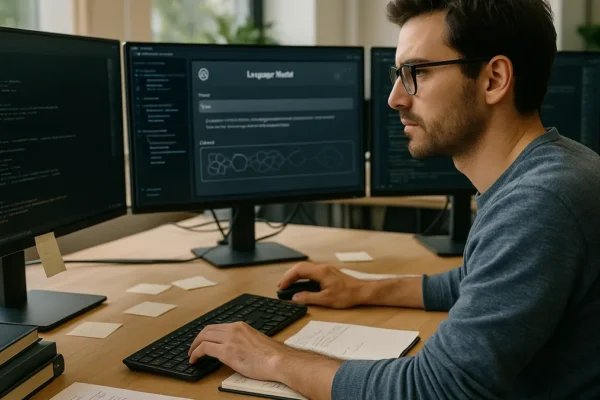
An AI researcher studying complex algorithm data on multiple screens in a modern office setting with natural light.

OpenAI’s GPT-5 Shows Chain-of-Thought Monitoring Works in Practice, but Only While the Reasoning Stays Readable

OpenAI’s GPT-5 deployment offers one of the clearest real-world signals yet that chain-of-thought monitoring can reduce deceptive model behavior, but the same release also makes the limit plain: this safety method only works as long as the model’s reasoning remains legible enough for humans and monitors to inspect. GPT-5 moved monitoring from research setup to…

Read More
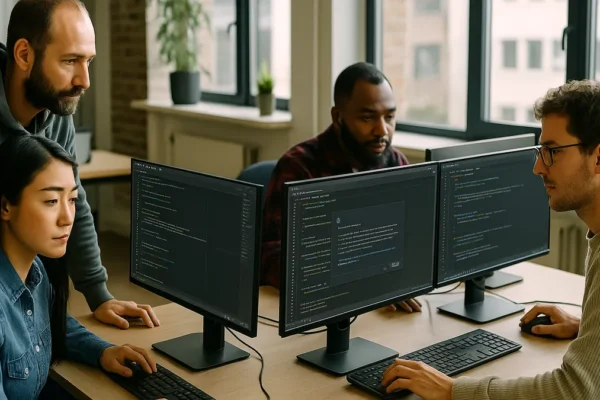
A group of software developers coding together with AI assistant tools visible on their computer screens in an open office setting.

GitHub Copilot, Cursor, Claude Code: Which AI Coding Tools Save Time Without Dulling Developer Intuition?

AI coding tools now cover far more than autocomplete, but the practical split is not simply “more automation versus less work.” The real difference is whether a team uses them to compress routine effort while still forcing understanding, because research from Anthropic and day-to-day engineering experience both point to the same risk: heavy assistance can…

Read More