









The Real Signal in Human-Robot Interaction Is Social Adaptation, Not Just Safety
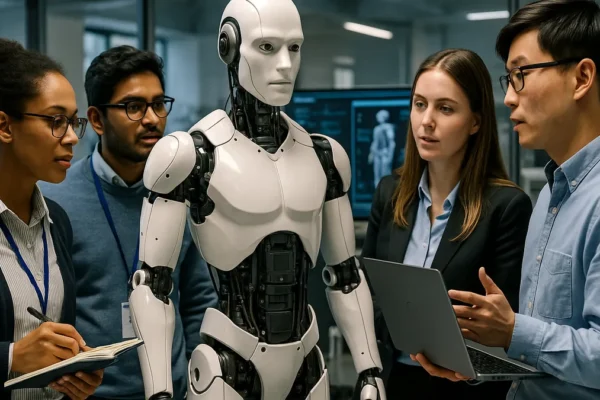
Human-robot interaction is no longer defined mainly by whether a robot can avoid hurting someone or look convincingly human. The stronger signal in current research is whether robots can work with people in real settings by reading social cues, adapting to cultural norms, and staying reliable despite noise, training gaps, and shifting environments. Why the…

Navigating the Tension: How AI-Driven Tools Reshape Vulnerability Detection
Recent advancements in AI-driven tools like OpenAI Codex are reshaping how organizations approach vulnerability detection in web applications. This transformation matters now as companies increasingly automate their security assessments, leading to a paradox where efficiency may overshadow critical human insights. Understanding AI-Driven Tools The power of AI tools like Codex lies in their ability to…

The Constraint Behind Chunk-Specific Contextual Augmentation in Retrieval-Augmented Generation
Recent advancements in Retrieval-Augmented Generation (RAG) have introduced chunk-specific contextual augmentation, a significant shift that enhances retrieval accuracy by embedding detailed metadata directly into document fragments. This development matters now as expanding knowledge bases demand more precise retrieval methods to maintain AI response quality and user trust. Embedding Context into Document Chunks The core innovation…

Google DeepMind’s AGI Framework Shifts the Debate From Bigger Models to Measured Cognitive Abilities
Google DeepMind is trying to make AGI progress harder to overstate. Its new framework replaces vague milestone talk and single benchmark scores with a structured test of ten cognitive abilities, then asks a stricter question: how those abilities combine, and how the result compares with demographically representative human baselines. Ten abilities instead of one headline…
Lucid’s Lunar Matters if Uber Wants a Cheaper Robotaxi Platform, Not a Vehicle It Can Order Yet
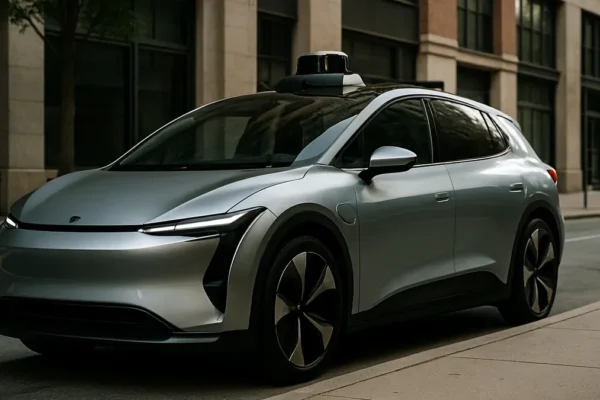
Lucid’s Lunar reveal is important less as a product launch than as a cost-and-platform signal: the company wants its upcoming midsize EV architecture to serve both consumer cars and future autonomous fleets. That could matter to Uber and other fleet operators if Lucid can turn its efficiency claims into a manufacturable robotaxi, but the gap…
Risk-Aware AI Agents Need More Than Confidence Scores
What changed in agent design is not just better confidence scoring. Uncertainty estimation is being wired into permissions, action gating, and user-facing deferral behavior so agents can do less when the situation is unclear, not merely report lower confidence after the fact. That shift matters in deployment because safety now depends on how uncertainty is…
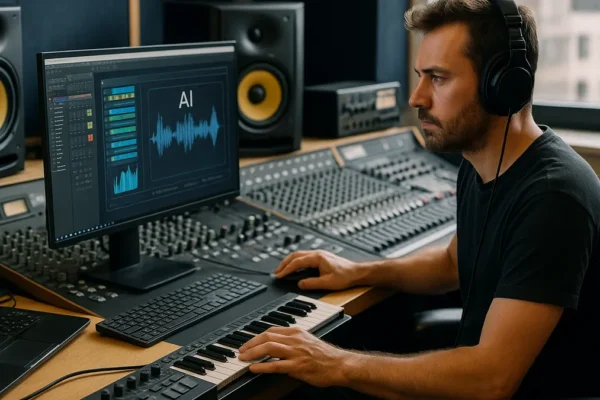
Google’s Lyria 3 Pro Matters to Creators Because It Adds Song Structure Control, Not Just Longer AI Tracks
Google’s Lyria 3 Pro is important less as a duration upgrade and more as a shift toward usable music production controls: it moves from 30-second clips in Lyria 3 to tracks up to three minutes, while letting users ask for intros, verses, choruses, and bridges inside the prompt. That difference changes who can use it…

How LiteRT Runtime Shifts On-Device Machine Learning with New GPU and NPU Limits
TensorFlow 2.21 has introduced a significant change by replacing TensorFlow Lite with LiteRT as its primary runtime for on-device machine learning. This shift arrives at a crucial moment, promising enhanced performance and flexibility for edge AI deployments but requiring developers to adapt to a new operational model. Fundamental Changes in Runtime Architecture LiteRT represents more…

Gradient Labs’ Banking AI Signal Is Operational Accuracy, Not Chatbot Scale
Gradient Labs is pushing a specific version of AI deployment in banking: not a generic customer-service bot, but a tightly controlled agent system built for regulated workflows where procedural accuracy, auditability, and response speed matter as much as language fluency. Its latest outbound agent, powered by OpenAI’s GPT-4.1 and GPT-5.4 mini models, is already being…