









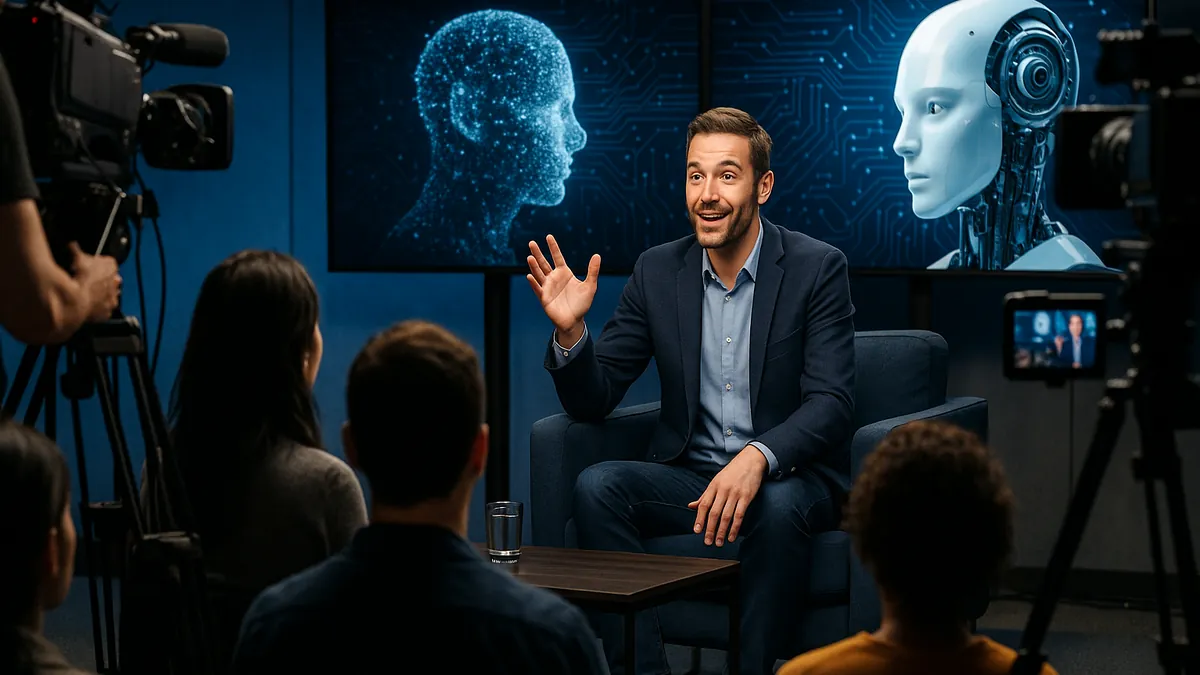
OpenAI’s acquisition of TBPN is not just a media add-on. It is a communications and governance move aimed at shaping how AI is discussed in public, especially as regulation, deployment, and trust become harder problems than product demos alone can solve.
Why OpenAI bought a talk show instead of another tool
TBPN is a founder-led business show with a daily live format, interactive audience participation, and a strong concentration of AI and tech coverage. It reportedly reaches about 70,000 viewers per episode across platforms including YouTube and X, and it is projected to generate $30 million in revenue in 2026. That makes it more than a niche content property: it is an existing distribution channel into the people building, funding, using, and debating AI systems in real time.
The strategic point is easy to miss if the deal is treated as simple media expansion. OpenAI is buying a place in the conversation around AI deployment, not just an audience. TBPN’s format already blends business news, industry reaction, and live feedback from viewers, which gives OpenAI something its normal corporate communications cannot: a recurring venue where product questions, policy disputes, and reputation risks are discussed in public by an audience that cares about both the technology and its consequences.
Editorial independence now sits inside a political reporting line
OpenAI says TBPN will keep its editorial independence, and Sam Altman has publicly said he expects the show to continue criticizing OpenAI when warranted. That commitment matters because the central risk in this acquisition is credibility loss. Once a show covering AI becomes owned by a leading AI company, every interview choice, booking decision, and tone shift becomes evidence either for or against the claim that the newsroom still operates freely.
The governance structure makes that test sharper. TBPN will report to OpenAI VP of global affairs Chris Lehane, a veteran political strategist whose background is not in newsroom management but in public argument, policy combat, and reputation defense. That is the clearest signal that OpenAI sees media as part of its policy and influence infrastructure. It also means independence will not be judged by formal statements alone, but by whether TBPN can still challenge OpenAI’s positions on issues where Lehane has been active, including pushes to curb state AI regulation and to ease environmental restrictions tied to data center expansion.
Why this matters more in 2026 than it would have earlier
The deal lands during a period when OpenAI is expanding aggressively and facing more external pressure at the same time. It follows the company’s $122 billion funding round, reported at an $852 billion valuation, and it is OpenAI’s seventh acquisition in 2026. Those are not the signals of a company simply refining one product line; they point to a company building control over multiple layers around AI, from research and deployment to distribution and public narrative.
That context changes the meaning of the TBPN purchase. OpenAI is no longer only trying to persuade developers to use its models. It also has to manage scrutiny from regulators, enterprise buyers, defense critics, infrastructure opponents, and competitors such as Anthropic. In that environment, a live media platform that speaks to AI builders and consumers becomes useful because it can normalize OpenAI’s framing of contested questions: how fast deployment should move, which risks deserve priority, who should set rules, and what counts as responsible criticism versus obstruction.
Fidji Simo, OpenAI’s head of AGI deployment, framed the value differently but compatibly: TBPN connects builders with users and can support a more continuous conversation about how AI affects daily life. That is a practical deployment argument, but it also reinforces the strategic one. The company wants a trusted setting where adoption, skepticism, and policy can be discussed on terms closer to its own.
The checkpoint is not revenue but trust retention
TBPN is already profitable, but OpenAI reportedly does not expect the deal to be a direct revenue engine. That makes trust the real metric. If viewers conclude the show has become a soft-power arm of OpenAI, the asset loses much of its value. If TBPN keeps booking critics, scrutinizing OpenAI’s own deals, and handling controversial topics without visible narrowing, then OpenAI gains something harder to buy than ad inventory: durable influence over the frame through which AI is interpreted.
Several warning signs will be easier to spot than abstract claims about independence. A narrower guest list, disappearing criticism of OpenAI, asymmetrical treatment of rivals, or avoidance of sensitive topics such as Pentagon work, regulation, or infrastructure externalities would suggest the reporting line is affecting coverage. The opposite is also testable: if TBPN remains willing to interrogate OpenAI strategy in front of the same 70,000-per-episode audience, then the company may have found a rare way to own a media property without fully hollowing out its editorial value.
| Checkpoint | What supports independence | What suggests narrative control |
|---|---|---|
| Guest selection | OpenAI critics, regulators, rivals, and skeptical researchers continue to appear | Coverage tilts toward allies, customers, and friendly commentators |
| Treatment of OpenAI news | Setbacks, controversies, and policy disputes are covered with the same rigor as competitors | Critical stories are softened, delayed, or reframed as misunderstandings |
| Policy discussion | Debate includes state regulation, energy use, labor effects, and military contracts | Discussion narrows to innovation benefits and anti-regulatory talking points |
| Audience trust | Viewers still treat TBPN as a place for candid industry scrutiny | Viewers begin treating the show as company-adjacent messaging |
Who should pay attention to this deal
Regulators and policy staff should watch it because the purchase creates a new channel through which a major AI company can frame debates around safety, competition, infrastructure, and state oversight. Founders and developers should watch it because TBPN has been a venue where market sentiment and product narratives move quickly. Journalists and researchers should watch it because this is a live test of whether AI firms can own influential discourse platforms while preserving enough independence to remain credible sources rather than strategic communications extensions.
The practical checkpoint is simple: do not judge the acquisition by the announcement language. Judge it over time by editorial behavior under pressure. OpenAI has bought reach, format, and community access. Whether it also gains trusted authority depends on whether TBPN can remain critical while sitting inside the company most often at the center of the story.