









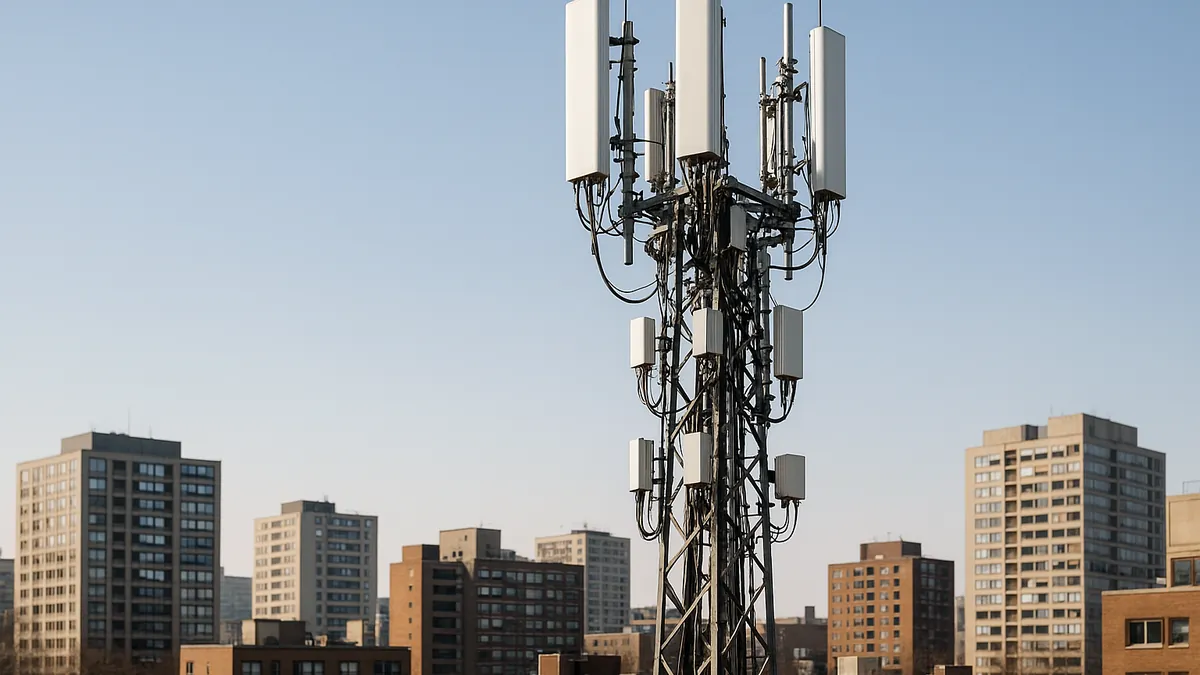
6G is still a late-decade standardization project, not a near-term consumer upgrade, and its defining change is not simply higher throughput than 5G. The shift under discussion is toward an AI-native wireless system that uses new spectrum bands, integrated sensing, and far more autonomous network behavior—while also introducing harder deployment constraints around terahertz hardware, dense infrastructure, and geopolitically sensitive supply chains.
The timeline is clear, but the milestone that matters comes before launch
Commercial 6G deployment is generally targeted for the early 2030s, with the late 2020s carrying the more important near-term checkpoints. Work around 3GPP Release 21 and the ITU-R IMT-2030 framework will determine whether vendors, operators, and governments are converging on a usable technical and policy baseline or simply advancing competing visions under the same label.
That timing is why current announcements should be read carefully. Public commitments from companies such as Nokia, Ericsson, Huawei, and Qualcomm show where the industry wants to go, but they do not mean the hard parts are settled. Early pilots are more likely to appear first in dense urban zones and industrial environments, where short-range links, controlled infrastructure, and specialized workloads can justify higher cost and complexity before any wide consumer rollout.
Terahertz capacity comes with a coverage penalty
The most visible technical jump is the move toward terahertz spectrum, roughly 100 GHz to 3 THz. In theory, that opens the door to peak rates near 1 Tbps. In practice, these frequencies lose signal strength quickly, have limited range that can fall below one kilometer, and are more vulnerable to atmospheric absorption than lower bands.

That changes the network buildout model. A viable 6G system would need much denser small-cell placement than 5G, plus stronger coordination with satellites to patch coverage gaps in rural, remote, or mobility-heavy scenarios. This is the point often lost when 6G is described as the next faster generation: the performance target depends on an infrastructure pattern that is materially harder and more expensive to deploy.
Why companies keep calling 6G “AI-native”
Qualcomm and other industry participants are framing 6G as AI-native because AI is being positioned inside the system itself, not just on top of it. The idea is that network design, spectrum use, traffic management, security response, and energy optimization would all rely more heavily on models and automated control loops across devices, edge systems, and cloud infrastructure.
This is a larger architectural break than the speed narrative suggests. In 5G, AI could assist operations; in 6G, the expectation is closer to continuous machine-led optimization of radio behavior, resource allocation, sensing functions, and service quality. That could help with congestion, latency, and energy efficiency, but it also raises harder governance questions: who audits model decisions, how privacy is protected when sensing is built into the network, and what happens when automation fails in systems supporting factories, transport, healthcare, or public infrastructure.
The “AI-native” framing therefore matters only if the control layer is mature enough to be trusted. Without that, 6G would risk becoming a technically ambitious radio upgrade whose management complexity overwhelms its promised autonomy.
Lab demonstrations are advancing faster than deployable systems
Research activity is real, but it should not be confused with commercial readiness. Chinese laboratories have reported terahertz tests above 200 Gbps in controlled conditions, and researchers are exploring methods such as vortex millimeter-wave transmission and superconducting waveguides to reduce loss and extend useful range. Those are meaningful signals of capability, but they do not yet solve the field conditions that operators have to finance and maintain.
Satellite-related claims deserve the same caution. China’s 2020 “6G satellite” experiment is often cited as evidence of progress in space-based terahertz transmission, yet independent verification remains limited. For buyers, regulators, and operators, unverified or narrow-scope demonstrations are not the same as interoperable equipment, certified standards, and repeatable deployment economics.
The next checkpoint is whether the ecosystem stays open enough to scale
Geopolitics is not a side issue for 6G; it shapes vendor choice, standards influence, and network resilience. The tensions that affected 5G supply chains are carrying into 6G, which is one reason open RAN and broader multi-vendor strategies are getting attention. Governments want less dependence on single suppliers, while operators want flexibility if standards or trade restrictions shift mid-cycle.
Whether that produces healthier competition or fragmented implementation will depend on a few concrete variables.
| Checkpoint | Why it matters | Warning sign |
|---|---|---|
| 3GPP Release 21 and IMT-2030 alignment | Shows whether core technical assumptions are converging across the industry | Competing regional profiles that reduce interoperability |
| Terahertz hardware feasibility | Determines whether peak-rate claims can move beyond labs into repeatable field systems | High cost, poor range, or power demands that make dense rollout uneconomic |
| AI control maturity | Affects reliability, security, spectrum efficiency, and operational automation | Opaque model behavior or weak governance for safety-critical use cases |
| Open RAN and multi-vendor progress | Reduces lock-in and helps absorb geopolitical shocks | Nominal openness with poor real-world interoperability |
| Infrastructure investment pace | Signals whether operators believe dense deployment can pay back | Preparatory spending without credible pilot economics |
Operator spending plans, including Telstra’s reported $800 million network investment tied to future readiness, show that preparation has started. But the practical decision lens is narrower than the headline vision: until standards harden, terahertz components prove deployable, and AI governance becomes credible, 6G remains a strategic buildout path rather than an imminent mass-market network.