








Apple’s smart home display is not slipping because the device itself is unfinished. Reports indicate the J490 hardware has been done for months, but the launch has moved to fall 2026 because the AI-powered Siri overhaul it depends on is still not ready. That makes this less a product timing tweak than a clear sign that Apple now treats assistant capability as a gate for hardware release.
What changed materially in Apple’s rollout plan
The important update is the new dependency order. Apple appears to have a finished smart home display with a 7-inch screen, facial recognition for personalized information, and a customized version of tvOS 27, yet it is still holding the product back. The reason is that the device’s core use case is tied to a more capable Siri that can handle context, personal data access, and cross-app actions well enough to make the product useful.
That corrects an easy misreading. This is not best understood as a simple hardware delay or a minor scheduling slip. Apple is effectively saying, through its launch timing, that this category does not work as intended without the new Siri. For a home hub, voice and contextual interaction are not add-ons; they are the interface.
The schedule shift also looks deliberate rather than temporary. The launch is now aligned with the iPhone 18 Pro and iOS 27 cycle, while Siri’s expected debut is being pushed toward WWDC 2026. Apple is bundling the device’s release with the software moment that can explain and support it.
Why Siri readiness matters more here than on an iPhone
A phone can survive a weak assistant because touch input, apps, and notifications carry most of the experience. A smart home display has less room for that fallback. If the product is meant to sit on a wall or speaker base and act as a household control point, then it needs to understand who is speaking, what they mean, and what action should happen across services without friction.
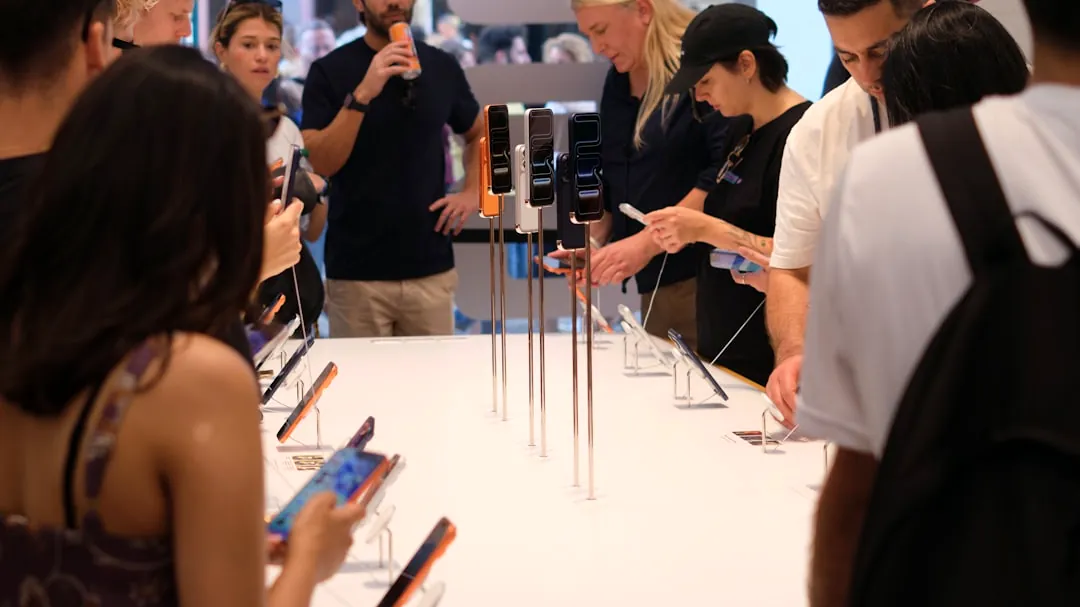
That is where the reported Siri overhaul matters. Apple’s new LLM-powered assistant is supposed to improve context understanding and cross-app interaction, while securely using personal data to answer in a more useful way. On this device, those capabilities are tied directly to the value proposition: showing the right calendar, reminders, music, and news for the recognized person, and turning spoken requests into reliable actions.
The facial recognition feature makes the dependency even tighter. Personalized output only feels intelligent if identity detection, context retrieval, and assistant behavior work together. If one layer is weak, the whole experience starts to look like a screen attached to a speaker rather than a meaningful home hub.
What the delay says about Apple’s AI deployment reality
Apple’s challenge is not just building a better language model. It has to ship an assistant that is accurate enough for consumer use, integrated enough to work across apps, and controlled enough to fit Apple’s privacy standards. The absence of the upgraded Siri from the current iOS 26.4 beta suggests the company is still working through reliability and readiness issues before exposing it broadly.
That matters because Apple is not deploying AI as a standalone chatbot. It is trying to turn Siri into an operating layer across devices and services. In that model, failures are more visible. A wrong answer in a chat window is one problem; a failed home command, incorrect personal summary, or broken app handoff inside a household device is another.
There is also an infrastructure constraint behind the product decision. A context-aware assistant for a shared home device needs low-latency voice handling, identity-aware personalization, and a split between cloud processing and on-device safeguards. Apple’s privacy posture raises the bar further, because it cannot rely on the same data collection and server-side behavior that some competitors use to improve assistant performance.
Where the device sits against Echo Show and Nest Hub
Apple’s smart display will inevitably be compared with Amazon’s Echo Show and Google’s Nest Hub, but the more useful comparison is not screen size or speaker design. It is what each company is willing and able to ship as the assistant layer. Apple appears to be delaying hardware specifically to avoid releasing a home device before that layer is credible.
| Factor | Apple smart home display (J490) | Why it matters |
|---|---|---|
| Launch status | Delayed to fall 2026 despite finished hardware | Shows software readiness is gating release |
| Core interface | AI-upgraded Siri with context and cross-app actions | The assistant is central, not optional |
| Personalization | Facial recognition for user-specific info | Requires identity, privacy, and assistant coordination |
| Platform base | Customized tvOS 27 | Suggests Apple is extending existing software rather than creating a separate home OS |
| Competitive posture | Privacy-focused ecosystem integration | Could differentiate the device, but only if Siri is reliable enough to justify the wait |
That trade-off is practical. Amazon and Google have long shipped smart displays with imperfect assistants because the market tolerates some inconsistency. Apple seems less willing to do that here, likely because this product is also a test case for other Siri-dependent hardware. If the assistant underperforms on the first home display, it weakens confidence in the rest of the roadmap.
What to watch next
The next real checkpoint is not another rumor about the hardware. It is Apple’s public demonstration of the new Siri, most likely at WWDC 2026, and the rollout timeline attached to it. That event should show whether Apple can actually present the assistant as a stable system feature rather than a forward-looking promise.
This matters beyond one device. Apple is reportedly developing other AI-dependent products, including a larger home display with a robotic arm, smart glasses, and camera-equipped AirPods. If Siri remains the bottleneck, those products face the same constraint: hardware can be ready, but the release window still depends on whether the assistant is good enough to carry the experience.
Q&A
Is the smart home display delay a hardware problem?
Based on the reported details, no. The hardware has been finished for months. The delay is tied to the incomplete AI overhaul of Siri.
Why is Siri so critical for this device?
Because the display is meant to function as a smart home hub with personalized information and voice-driven control. Without a context-aware assistant, much of the product’s intended value falls away.
What is the next milestone to follow?
Watch WWDC 2026. Apple’s public demo and rollout plan for the new Siri should indicate whether the fall 2026 device launch is realistic.
>