






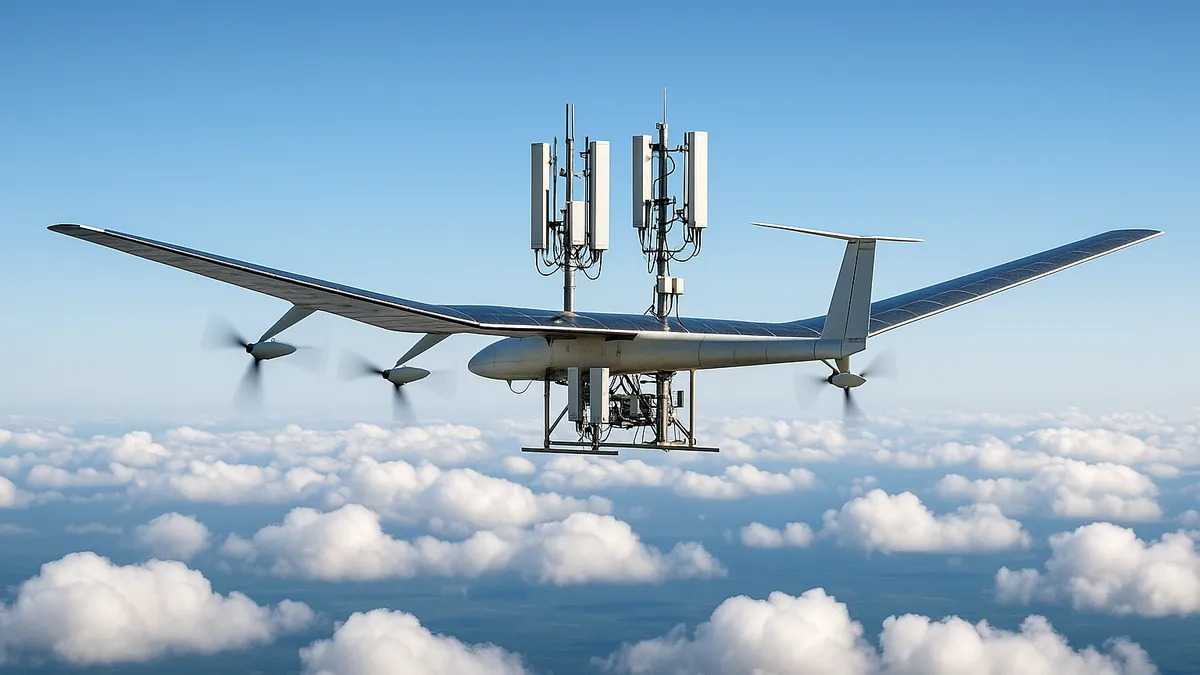
Sceye’s new SceyeCELL platform matters because it is being built as a third network layer, not as a replacement for either cell towers or satellites. Operating around 60,000 feet, it aims to deliver the coverage footprint of roughly 500 ground towers while still behaving like a cellular system that operators can steer, slice, and connect into an existing mobile core when terrestrial infrastructure is damaged or absent.
A stratospheric layer with cellular behavior
The easy misread is to treat SceyeCELL as another satellite story. Sceye is describing something different: a high-altitude platform system that stays in the stratosphere for weeks or months using solar power and batteries, but carries full 4G/5G cellular equipment rather than acting only as a distant relay. That changes the deployment logic. A satellite gives wide reach, but SceyeCELL is meant to provide more direct and adjustable cellular coverage over a targeted area, especially where towers are down, too sparse, or too expensive to build.
The altitude is the key distinction. From about 60,000 feet, one platform can cover a very large footprint without being exposed to the same ground-level failures caused by floods, fires, or power loss. At the same time, it sits much closer than low-earth orbit systems, which gives operators another option when they need stronger control over coverage patterns, service classes, and restoration timing than space-based systems typically offer.
Why the engineering is the product, not background detail
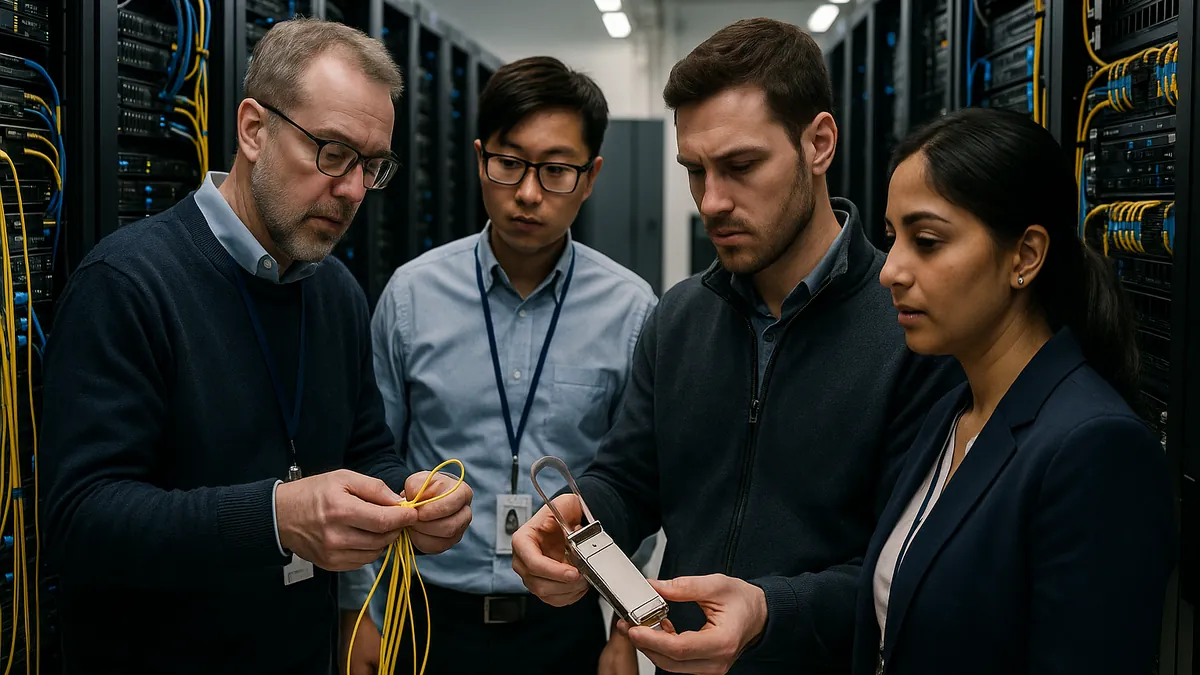
SceyeCELL’s technical claims are tied to conditions that make or break deployment. The platform is designed to survive roughly −70°C temperatures, low pressure, high radiation, and steep thermal gradients in the stratosphere. Those constraints are not incidental; they define whether a weeks-long flight can support telecom uptime instead of a short-lived demonstration.
On the network side, Sceye says the platform combines advanced beamforming with real-time motion compensation so coverage can remain precise even while the aircraft is moving. That is a practical requirement if the system is going to carry mission-critical traffic rather than just prove that a signal can be transmitted from altitude. Integrating a full cellular core environment also matters because it lets operators apply familiar controls such as policy management, traffic prioritization, and network slicing for specific users or services instead of treating the platform as a blunt coverage extender.
Where deployment gets real: disaster operations and staged handover
The first commercial test flight is planned with SoftBank Corp., connecting from New Mexico to Japan and focusing on emergency and disaster-response use. That test is more important than the headline flight path. The real question is whether traffic can be backhauled cleanly into SoftBank’s core network under conditions that resemble actual service restoration, not just a controlled aviation milestone.
Sceye’s operating model is built around pre-positioning platforms, launching and provisioning service within hours, then handing coverage back to terrestrial networks as repairs are completed. That sequence is what makes the platform potentially useful to hospitals, utilities, public safety agencies, and financial networks that cannot wait for tower rebuilds after a major outage. In this model, stratospheric coverage is neither permanent infrastructure nor a one-off emergency patch; it is a planned resilience layer with a start point, a control plane, and an exit path.
| Layer | Best use | Main strength | Main limit |
|---|---|---|---|
| Ground towers | Dense everyday mobile service | Established local capacity and integration | Vulnerable to local physical damage and power loss |
| SceyeCELL stratospheric platform | Rapid restoration, rural expansion, temporary high-coverage missions | Wide-area cellular coverage with operator control and faster targeted deployment | Depends on airspace approval, endurance performance, and smooth core-network integration |
| Satellites | Broad remote reach and backhaul redundancy | Very wide geographic availability | Less flexible for precise local cellular behavior and targeted restoration |
The buyers are operators and governments, but the burden sits with regulators and core-network teams
The platform is easiest to understand in places where operators already think in layered coverage terms. The draft points to Saudi Arabia as one example where high-altitude platform systems are being considered alongside towers and satellites rather than against them. For telecom operators, the attraction is lower dependence on building dozens of remote towers across deserts, rural corridors, or maritime routes. For governments, the attraction is continuity: emergency alerts, push-to-talk services, and backup links for critical infrastructure when terrestrial networks fail.
But adoption is not only a radio problem. Spectrum coordination, airspace approvals, lawful intercept compliance, sovereign key custody, and zero-trust ground segments all sit between a successful test and a commercially usable network layer. Sceye’s emphasis on open interfaces and multi-orbit backhaul options suggests it knows operators will resist a system that adds resilience but creates a new lock-in risk or governance blind spot.
The next checkpoint is not altitude or endurance alone
The upcoming test flights should be watched for operational metrics rather than headline claims. The useful indicators are attach time, handover success, backhaul stability into an existing mobile core, and whether policy-controlled slices hold up under disaster-style traffic loads. If those numbers are weak, the platform remains an interesting aircraft. If they are strong, SceyeCELL becomes a deployable resilience tool with a clearer place between towers and satellites.
The practical limit is that this category succeeds only if it fits into restoration playbooks before an emergency begins. Pre-approval, pre-positioning, and rehearsed handover matter more than the promise of broad coverage on paper. That is the threshold that will determine whether SceyeCELL becomes telecom infrastructure or stays a specialized demonstration.