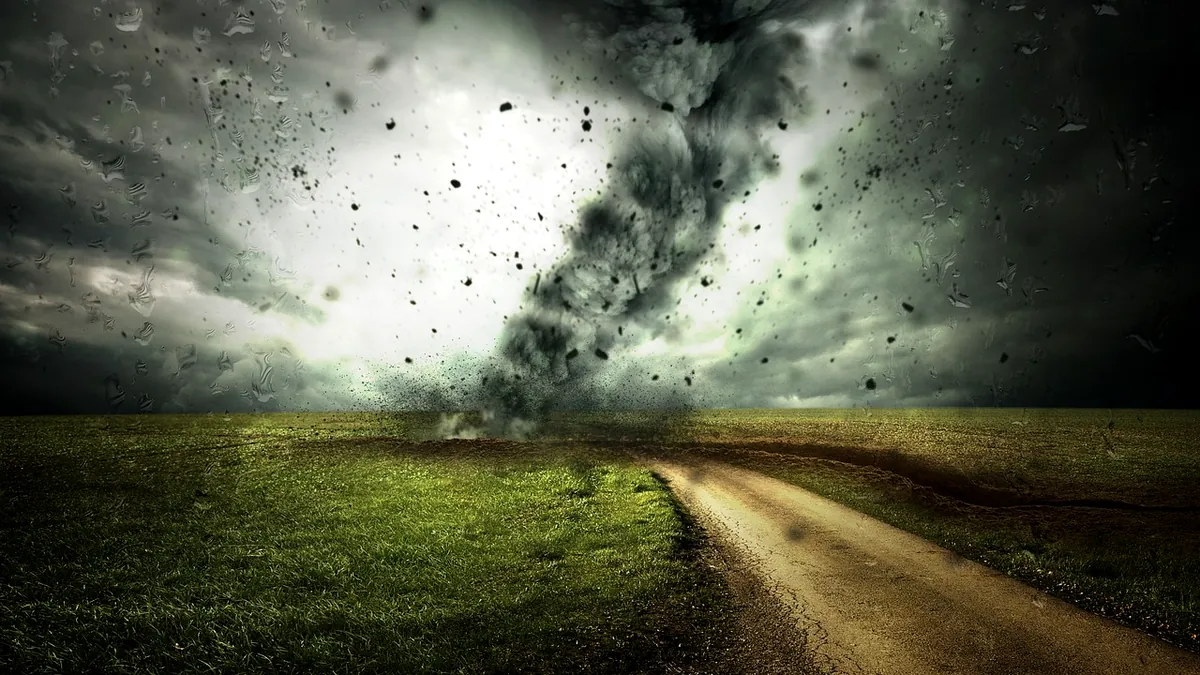
Recent developments in artificial intelligence have significantly improved hurricane forecasting capabilities, particularly through the integration of advanced AI models by organizations like Google DeepMind and DeepSeek.
These models are designed to predict the formation, track, intensity, size, and shape of tropical cyclones, generating up to 50 possible scenarios for a storm’s trajectory and impact, with forecasts extending up to 15 days in advance. Such advancements enable meteorologists to issue more timely and accurate warnings, potentially reducing the loss of life and property by allowing communities to prepare more effectively for impending storms.
In December 2025, DeepSeek introduced two new variants of its AI model, DeepSeek-V3.2 and DeepSeek-V3.2-Speciale, which are tailored for different applications. The DeepSeek-V3.2 model is noted for its balance between inference speed and reasoning capability, while the Speciale variant is positioned as a competitor to other leading AI models, showcasing enhanced reasoning abilities. These models are available across multiple platforms, including web and mobile applications, and are designed to be cost-efficient.
Google DeepMind has also made strides in this area by launching a new AI model that is being integrated into the workflow of the U.S. National Hurricane Center (NHC). This partnership aims to enhance the accuracy and speed of storm warnings, addressing challenges posed by traditional forecasting methods that rely heavily on complex mathematical equations and powerful supercomputers. The new AI system can produce ensemble forecasts in about one minute, a significant reduction in time compared to conventional models.
Both organizations emphasize the importance of collaboration with the NHC to refine their forecasting capabilities. The AI models leverage historical weather data to simulate potential hurricane paths and intensities, marking a shift from traditional physics-based approaches. As these AI technologies continue to evolve, they hold the potential to transform how meteorologists predict and respond to tropical cyclones, ultimately aiming to save lives and mitigate damage to communities through improved hurricane forecasting.
Context and Significance
The integration of advanced AI models into hurricane forecasting represents a significant shift in meteorological practices. Traditional methods, which heavily rely on complex mathematical equations and supercomputing resources, are being complemented by AI technologies that can process vast amounts of historical weather data. This evolution not only enhances the accuracy of predictions but also provides a more dynamic approach to understanding tropical cyclones.
Practical Implications
Q: How do AI models improve hurricane forecasting?
A: AI models can generate multiple scenarios for storm trajectories and impacts, allowing for quicker and more accurate forecasts. These capabilities are further enhanced by recent advancements in machine learning techniques.
Q: What are the benefits of the new AI models introduced by DeepSeek? These advancements enable meteorologists to analyze vast amounts of historical and real-time data more efficiently, leading to significantly improved accuracy in predicting hurricane paths and intensities.
A: The new models balance inference speed and reasoning capabilities, making them efficient for various applications while being cost-effective. These advancements enable meteorologists to analyze vast datasets in real-time, significantly improving the accuracy of storm trajectory predictions and enhancing preparedness measures for affected regions.
Key Points to Watch
| Organization | Model Name | Key Features |
|---|---|---|
| DeepSeek | DeepSeek-V3.2 | Balance between speed and reasoning |
| DeepSeek | DeepSeek-V3.2-Speciale | Enhanced reasoning capabilities |
| Google DeepMind | New AI Model | Rapid ensemble forecasts in about one minute |
What Comes Next
As AI technologies continue to advance, their role in hurricane forecasting is expected to expand further. Collaboration between AI organizations and meteorological agencies will likely enhance predictive capabilities, ultimately aiming to improve disaster response strategies and community resilience against tropical cyclones.
답글 남기기